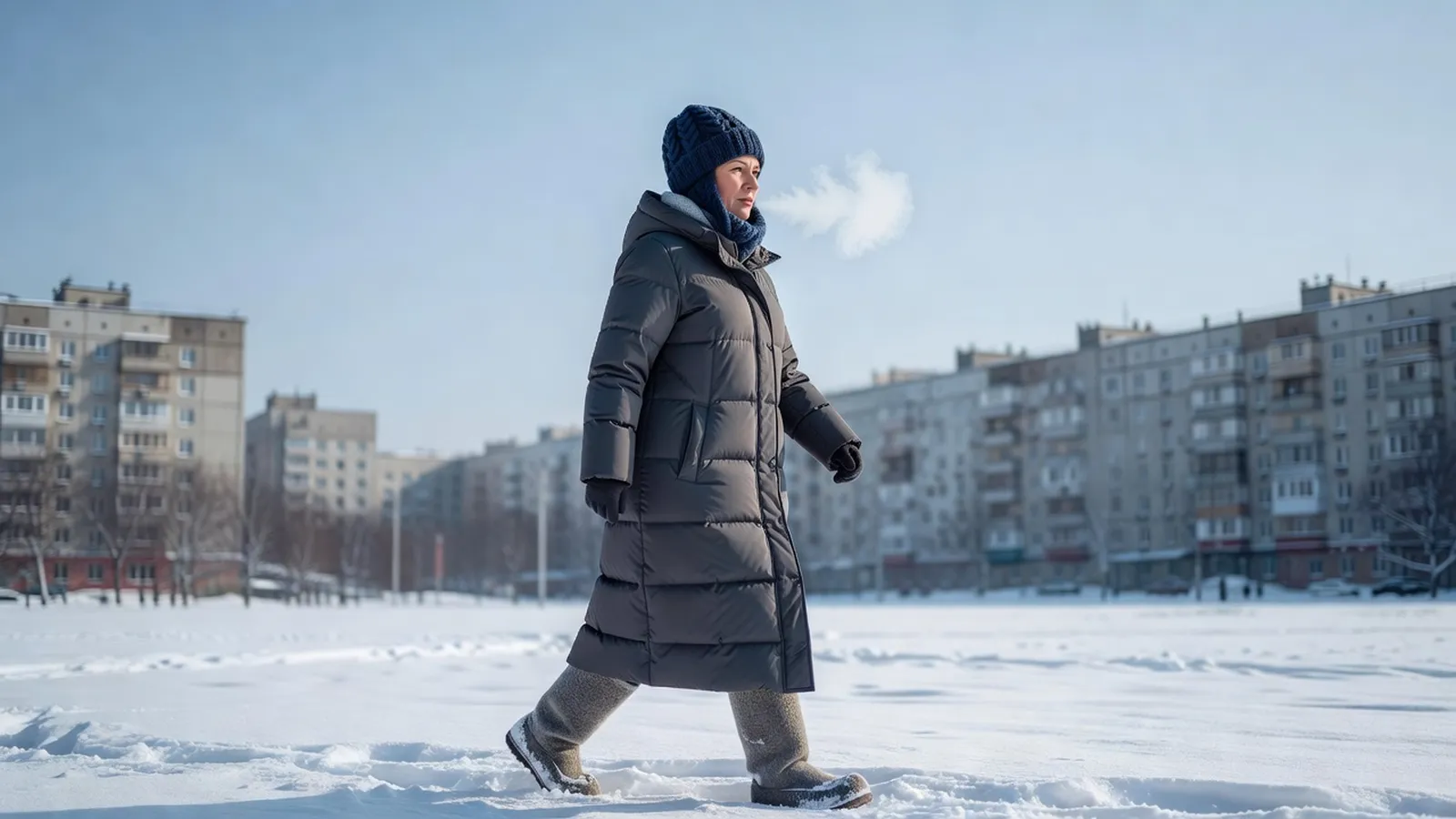
For winter in Moscow or Saint Petersburg, pack a wool or synthetic top, a removable insulating layer, a wind-resistant coat and boots that fit with warm socks. Bring a toque, mittens and a scarf. Choose the footwear for the ground you expect: a felt lining answers a different need from a waterproof bottom. Moscow's January averages give Canadians a useful point of comparison with Montréal and Winnipeg. For Saint Petersburg, keep the adjustable outfit but use the city's own forecast.
What Moscow's January means at the coat rack
At Moscow station 27612, the January mean was −9.3 °C over 1961–1990, according to the Russian Hydrometcentre's city climate table. The average daily low was −12.3 °C and the average daily high was −6.3 °C. Even the high in that set of averages is below freezing. That makes a winter coat a sensible starting point for packing; it doesn't mean a visitor can lay out the same clothes for every day of a stay.
The dates matter. The Hydrometcentre's separate temperature record for the VDNKh station also gives −9.3 °C for January over 1961–1990. The World Meteorological Organization's Moscow entry reproduces the average low and high from the Russian national service but does not identify an averaging period. Neither record turns those figures into recent normals. Nor is the average low a lower limit: it describes a collection of days, not the coldest morning for which to prepare.
There is another easy misreading at foot level. For January 1961–1990, the Hydrometcentre reports 42 mm of precipitation in Moscow and an average of 11 days with more than 0.1 mm. Those are not eleven days of snowfall. The figures don't say what will be underfoot at a particular street crossing. Use the normal to decide which boots merit room in the bag, then look at the day's conditions to decide which pair goes on your feet.
For a trip that includes Saint Petersburg, don't carry the Moscow numbers across with the clothes. A sweater can serve in either city; a station average belongs where it was measured. The same distinction applies to the other destinations in our regional guide to dressing for an Eastern European winter.
A city outfit that can come indoors
Start with what you want to be wearing after you take off the coat. For a walk followed by an afternoon indoors, that might be a long-sleeved wool top under a cardigan, with a winter coat over both. If the room is warm, the cardigan can come off with the coat. If the next part of the day involves a wait outside, it is ready to put back on. A sweater left at the bottom of a packed bag is less useful than one you can reach before leaving the building.
The choice of fabric is about moisture as much as warmth. In its 2025 guidance on dressing for work in the cold, the Canadian Centre for Occupational Health and Safety (CCOHS) gives wool, polyester and polypropylene as options next to the skin. It advises against cotton for cold work because it gets damp readily and loses insulation. Wool and synthetic fibres retain warmth when damp. For the city walker, the useful question is what the shirt will be like after a brisk walk, when the walking stops.
Leave room inside the coat for the sweater you actually intend to wear. CCOHS points to the insulating role of the air between garments and recommends middle layers that are easy to open or remove. Try the combination together: close the coat, reach for the scarf and see if you can open the sweater without taking everything off. For someone moving between a heated room and an outdoor queue, that small detail can decide which sweater earns its place. Our guide to arranging winter layers looks more closely at the jobs of the inner, middle and outer garments.
Let the forecast settle the choice of outer layer. Environment and Climate Change Canada's winter guidance (2026) calls for protection from wind; CCOHS specifies a waterproof outer layer in wet conditions. A padded coat supplies an insulating garment, but the word padded doesn't answer the question about water. Check the description of the coat you own. Make the same distinction when considering boots: what lines the inside and what protects the outside are separate questions.
Valenki, felt liners and sheepskin boots
The Russian Museum of Ethnography's account of valenki (2023) identifies these boots with Russian felt and describes their use in frost. It also records a present-day detail: in parts of Arkhangelsk Oblast, low felt footwear with a sewn-on upper remains in use. That's evidence of a particular material worn in a particular place. It doesn't establish that valenki are standard street footwear in Moscow or Saint Petersburg.
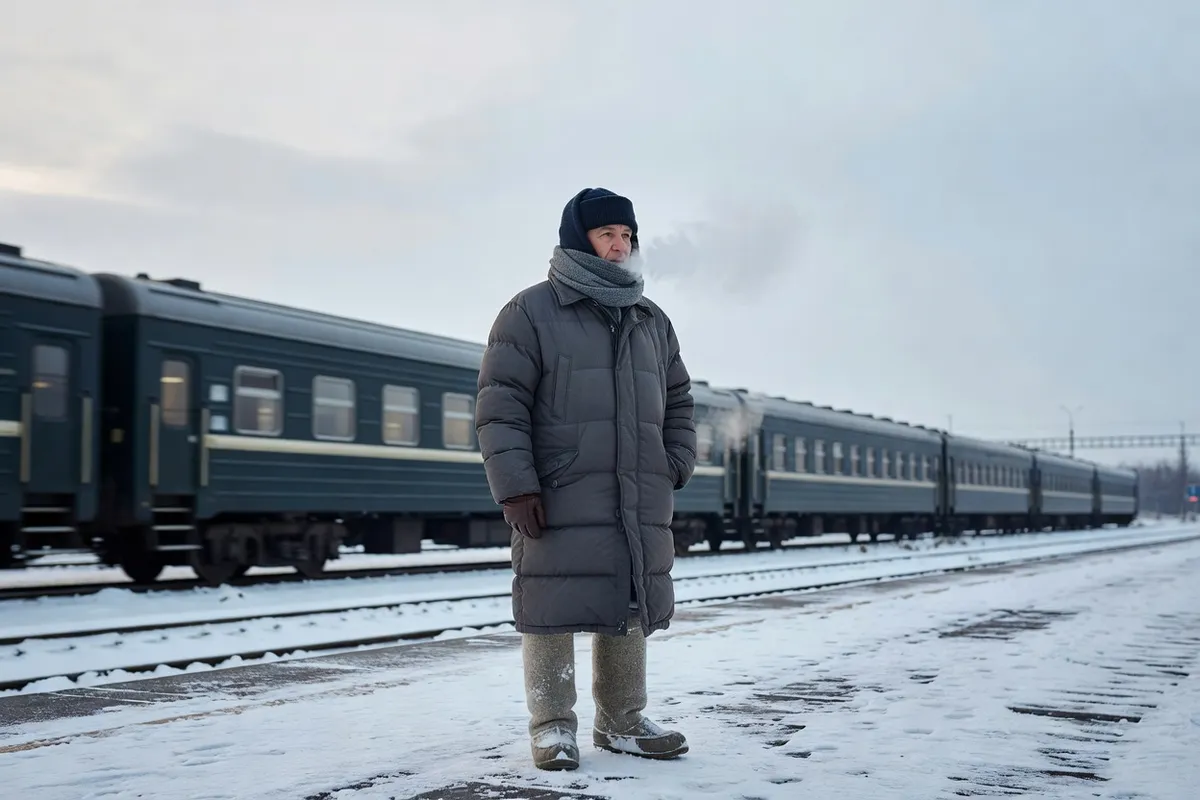
Look at the boots on the platform and there are two quite different questions you could ask. Why felt on a cold day? The museum account speaks to that use. Would this particular pair keep water out if the next stretch of pavement were slushy? A view of the boots can't tell you, and the museum doesn't make that claim. If water is the concern, look for information about the whole boot, not reassurance in the name of the material.
Felt can also be one part of a boot rather than its defining outer material. For heavy work in cold conditions, CCOHS (2025) describes a combination of rubber at the bottom, leather above, felt lining and a removable felt insole. It notes that the leather allows perspiration to evaporate. The example is useful even if you're packing for a station walk rather than a work shift: it shows exactly where each material sits. It is not a description of valenki.
Sheepskin boots are a separate option to assess on their own terms. Before packing a pair, try them with your winter socks and check what the maker says about use in wet conditions. If the only detail you can confirm is the lining, you still have a decision to make about wet pavement. The guide to sheepskin boots is a useful companion here. Choose the pair for an identifiable part of the trip, not because sheepskin sounds like a requirement for a Russian winter.
Three outings, three different clothing decisions
A Moscow walk with a warm room at the end
Picture a morning walk to an appointment, followed by a long stretch indoors. Moscow's average January high of −6.3 °C in the Hydrometcentre's 1961–1990 record gives the outdoor part some context. It tells you nothing about the room where you'll spend the afternoon. Lay out the indoor top first, then add a middle layer that opens at the front and a wind-resistant coat. Put the mittens where you can reach them again on the way out, rather than in a bag you plan to leave behind.
On the walk, the decision isn't simply coat on or coat off. Environment and Climate Change Canada (2026) advises taking off a layer before perspiration builds up and changing out of wet clothes. A middle layer you can remove lets you keep the outer protection you still want. At the appointment, take a moment to notice which garment is damp before hanging everything together. If the route home includes a wait that the outward trip didn't, put the dry insulating layer back on before heading out. The return journey needn't be dressed exactly like the first.
A wait on an exposed station platform
Here the walk to the station and the wait for the train deserve separate thought. A coat worn open on the approach may need closing on the platform. Have the toque, scarf and mittens to hand before the wait begins. Check the wind as well as the air temperature: the Moscow normal does not include a wind chill for your departure time.
The distinction is easy to see in Environment and Climate Change Canada's wind chill chart (2025). With the air at −10 °C, a wind of 20 km/h gives a wind chill of −18; at 40 km/h, the index is −21. This is an illustration, not a Moscow wind observation. The index describes the combined effect of wind and cold on exposed skin. It doesn't mean the platform or the leather of a boot has become colder than the air. The practical response is to attend to the opening at the neck and the ears above the collar, not to treat the index as a footwear rating.
For the wait itself, resist the impulse to pull an extra-thick sock into a boot that already fits closely. CCOHS explains that a sock squeezed inside a boot loses some of its insulation and crowds the foot. Make that fit check at home with the whole outfit on. You want to discover a poor match while you can still change the socks or the boots, not while standing on the platform.
A Saint Petersburg crossing when the pavement is wet
Suppose the local forecast points to wet conditions and the route includes a slushy crossing before a change into indoor shoes. This is a conditional plan, not a claim about how often it snows or thaws in Saint Petersburg. Start at the crossing: choose boots with protection against slush and cold water, then consider what happens to your feet during the rest of the walk.
CCOHS draws a useful distinction in its cold-work guidance. Fully waterproof footwear keeps outside water out but also holds perspiration in; the socks and insulation can get wet from the inside. A waterproof boot can therefore be right for the crossing without leaving you in dry socks at the destination. Put a dry pair with the indoor shoes. When you change, check the socks as well as the outside of the boot rather than assuming the source of any dampness was a leak.
If the street turns out to be dry, there is no reason to invent a slush problem to justify a particular pair. Reconsider the length of the walk and the time spent standing instead. That's the part of this Saint Petersburg outfit worth taking to another city: the decision changes with the ground, even when the coat and sweater stay the same.
Moscow beside Winnipeg and Montréal
The Moscow column below uses the Russian Hydrometcentre's station normals for 1961–1990. The Canadian figures are Environment and Climate Change Canada's 1991–2020 normals for Winnipeg Richardson and Montréal Trudeau, both airport stations. Read across a row for a reference you might recognize from home, not for a comparison of identical periods.
| Topic | There | Here |
|---|---|---|
| January mean temperature | Moscow: −9.3 °C | Winnipeg: −16.3 °C; Montréal: −9.2 °C |
| Average January daily low | Moscow: −12.3 °C | Winnipeg: −21.2 °C; Montréal: −13.5 °C |
| Average January daily high | Moscow: −6.3 °C | Winnipeg: −11.4 °C; Montréal: −5.0 °C |
| What the January precipitation figures measure | Moscow: 42 mm of precipitation; no snowfall total in this table | Snowfall: 25.0 cm in Winnipeg and 52.0 cm in Montréal |
| Days counted in January | Moscow: 11 days with more than 0.1 mm of precipitation | At least 0.2 cm of snowfall: 12.2 days in Winnipeg and 15.4 in Montréal |
For a Montréal reader, the monthly means look remarkably close. That's a reasonable prompt to pull a familiar city coat out of the closet rather than assume a trip requires a different wardrobe. Stop short of transferring Montréal's snowfall to Moscow, though. The Canadian snow measurement and the Russian precipitation measurement answer different questions. Neither describes the state of the pavement outside the station when you arrive.
For a Winnipeg reader, the daily highs offer another way into the table. In Environment and Climate Change Canada's 1991–2020 normals, the high stayed at or below −10 °C on an average of 17.0 January days in Winnipeg, compared with 7.6 in Montréal. If your usual Winnipeg outfit is built around a cold wait even in the afternoon, keep the option of that extra layer in Moscow. Don't assume you have to wear it for an entire day indoors and out. The Canadian winter boot guide takes the same local approach to matching footwear to a day's use.
What to lay out before you zip the bag
Put a complete change for the day's main transition together. For the Moscow appointment, set the indoor top beside the sweater and coat, and decide where the sweater will go when you take it off. For the platform, put the scarf and mittens with the coat rather than with the spare clothes. For the wet crossing, keep the change of socks with the shoes you'll put on at the other end. Each arrangement answers a specific inconvenience without requiring a second winter wardrobe.
If packing for a child as well, check the child's outfit separately. The Canadian Paediatric Society's winter advice (2023) calls for waterproof, warm boots with space to move the toes and room for extra socks. It advises removing wet boots when outdoor play ends. For clothing, it favours layers that are easy to change, covered ears and mittens rather than gloves. Try the child's actual socks in the boots before putting a spare pair in the bag; room for another sock is different from an obligation to wear it.
Finally, give each city its own departure check. Take Moscow's climate record as a reason to pack for cold, the museum's account as a reason to distinguish felt footwear from a felt lining, and the local forecast as the guide to what goes on today. Back in Canada, the same outfit can be reconsidered piece by piece. Sometimes the useful change is not a heavier coat at all. It's a sweater you can leave off for the walk and put back on for the wait.
Frequently asked questions
What should I wear for a January day in Moscow?
A wool or synthetic base, a sweater you can open or remove, a wind-resistant winter coat, warm socks and insulated boots make an adjustable starting outfit. Add a toque, mittens and a scarf; check the local forecast before deciding what to wear out the door.
Can I use Moscow's temperatures to pack for Saint Petersburg?
Use the same questions about wind, wet ground and time outdoors, but check Saint Petersburg's own forecast. The Hydrometcentre figures for Moscow describe a particular station, not both cities.
Are valenki made of sheepskin?
The Russian Museum of Ethnography identifies valenki as felt footwear. Its account documents their use in frost, not a waterproof rating or a claim about sheepskin boots.
Should I pack thicker socks for a long wait outside?
Check the fit before changing socks. The Canadian Centre for Occupational Health and Safety advises trying boots with the socks intended for them, since a thick sock compressed inside a boot loses insulation.
Is Moscow's January closer to Montréal's or Winnipeg's?
By monthly mean, Montréal is the closer reference: the Hydrometcentre gives Moscow −9.3 °C for 1961–1990, while Environment and Climate Change Canada gives Montréal −9.2 °C and Winnipeg −16.3 °C for 1991–2020. The periods differ, and the means do not describe wind or street conditions.
Sources
Verified on
- Гидрометцентр России, Москва : климатические нормы, Росгидромет, 2026.
- Гидрометцентр России, Нормы температуры воздуха для Москвы (станция ВДНХ), Росгидромет, 2026.
- Organisation météorologique mondiale, World Weather Information Service : Moscow, OMM (exploité par l'Observatoire de Hong Kong), 2026.
- Российский этнографический музей, Лекция « Русские валенки », Российский этнографический музей, Saint-Pétersbourg, 2023.
- Centre canadien d'hygiène et de sécurité au travail (CCHST), Cold Environments - Control Measures, Centre canadien d'hygiène et de sécurité au travail (CCHST), 2025.
- Environnement et Changement climatique Canada, Wind chill and the Wind Chill Index, Gouvernement du Canada, 2025.
- Environnement et Changement climatique Canada, Be prepared for winter weather, Gouvernement du Canada, 2026.
- Environnement et Changement climatique Canada, Canadian Climate Normals 1991-2020 Data: MONTREAL TRUDEAU (AIRPORT), Gouvernement du Canada, 2025.
- Environnement et Changement climatique Canada, Canadian Climate Normals 1991-2020 Data: WINNIPEG RICHARDSON (AIRPORT), Gouvernement du Canada, 2025.
- Société canadienne de pédiatrie, Winter safety: Advice for parents and kids, Société canadienne de pédiatrie, 2023.