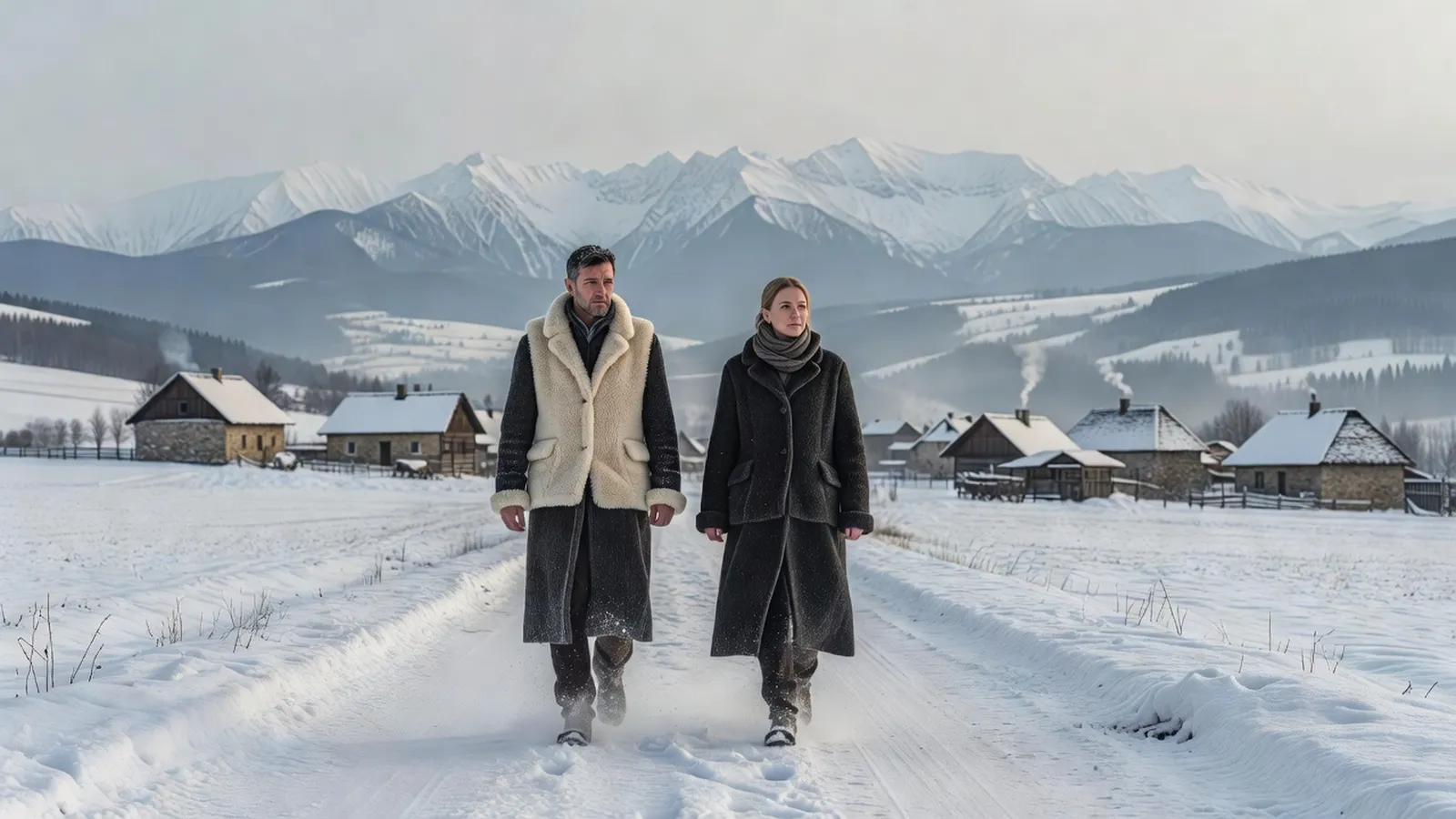
A Romanian winter is cold, but it is not the deep freeze many Canadians picture. Bucharest's January averages sit close to -1 °C, with typical nights below zero and typical afternoons a little above it, according to Romania's national weather service and the World Meteorological Organization. That calls for wool, thin layers and dry feet rather than arctic gear. This page sets those numbers beside Winnipeg and Montréal, walks through three typical situations and lists what a Canadian reader can borrow.
How cold a Romanian January really is
Start with the thermometer. Romania's National Meteorological Administration (ANM) puts the January long-term mean at Bucharest-Filaret at -0.9 °C, calculated over 1961-2025 in its multi-year climate description for January. The World Meteorological Organization's city page for Bucharest, which relies on data from the same national service for 1981-2010, lists a January mean daily minimum of -4.8 °C and a mean daily maximum of 2.8 °C. Taken together, those figures describe a month in which the typical day begins below freezing and ends slightly above it.
Two cautions come with the numbers. The two sources use different periods, one of them tied to a named station, so they are neighbouring pieces of evidence rather than a single dataset. And an average of -0.9 °C is built from mild days and hard ones. According to ANM, the lowest minimums of the winter fall in January, since continental polar air masses linger over the eastern half of Europe. That air does not arrive every day, but when it settles in, nights drop well under the averages quoted above. The same administration reports January means between -4 and 0 °C across most of the country, which puts Bucharest toward the milder end of that range.
The Carpathians are another matter. The sources read for this page give no figures for the mountain ranges, so none appear here. A reader planning a trip to higher ground should consult the national service for the exact area and altitude, and should expect exposed terrain to feel windier and colder than the capital. That is the reason the wind-chill logic later in this page matters more than any single average.
For the wider region, the overview of winter across Russia and Eastern Europe shows where Romania sits. One comparison from the WMO's city listings is worth repeating with its caveat: the January mean daily minimum is -12.3 °C for Moscow and -4.8 °C for Bucharest, though the averaging periods differ and Moscow's is not stated. Those two cities do not call for the same wardrobe, and the page on dressing for a Russian winter picks up the colder end of the scale.
What gets worn: wool, layers and one note on sheepskin
A fair warning first. The sources behind this page document Romania's climate and the collections of its national museum; they are not a survey of what people wear on the street. So this section describes what the climate asks of a wardrobe, using Canadian occupational-health and public-health guidance, which is written for exactly this kind of cold. It does not claim to report fashion.
The Canadian Centre for Occupational Health and Safety (CCOHS) favours stacking layers over wearing one bulky garment. Against the skin goes a layer that insulates while drawing moisture away; wool, polyester and polypropylene all do the job. Above it come insulating pieces that open or come off with little effort, and on the outside a waterproof shell for wet conditions. Cotton is ruled out: it soaks up water fast and stops insulating, whereas wool and synthetics stay warm when damp. In its cold-environment guidance, the organization further observes that the air caught between layers insulates better than fabric alone, and that you can shed one layer before perspiration sets in.
That logic fits the Bucharest figures well. A day that runs from -4.8 °C to 2.8 °C on average, a spread of 7.6 degrees, is poorly served by a single bulky coat. A wool or synthetic base, an insulating middle layer and a wind-resistant shell can be adjusted three times between a cold platform in the morning, a heated office and an afternoon walk. Our layering guide lays out that system in Canadian conditions, and nothing about it changes at the Romanian border.
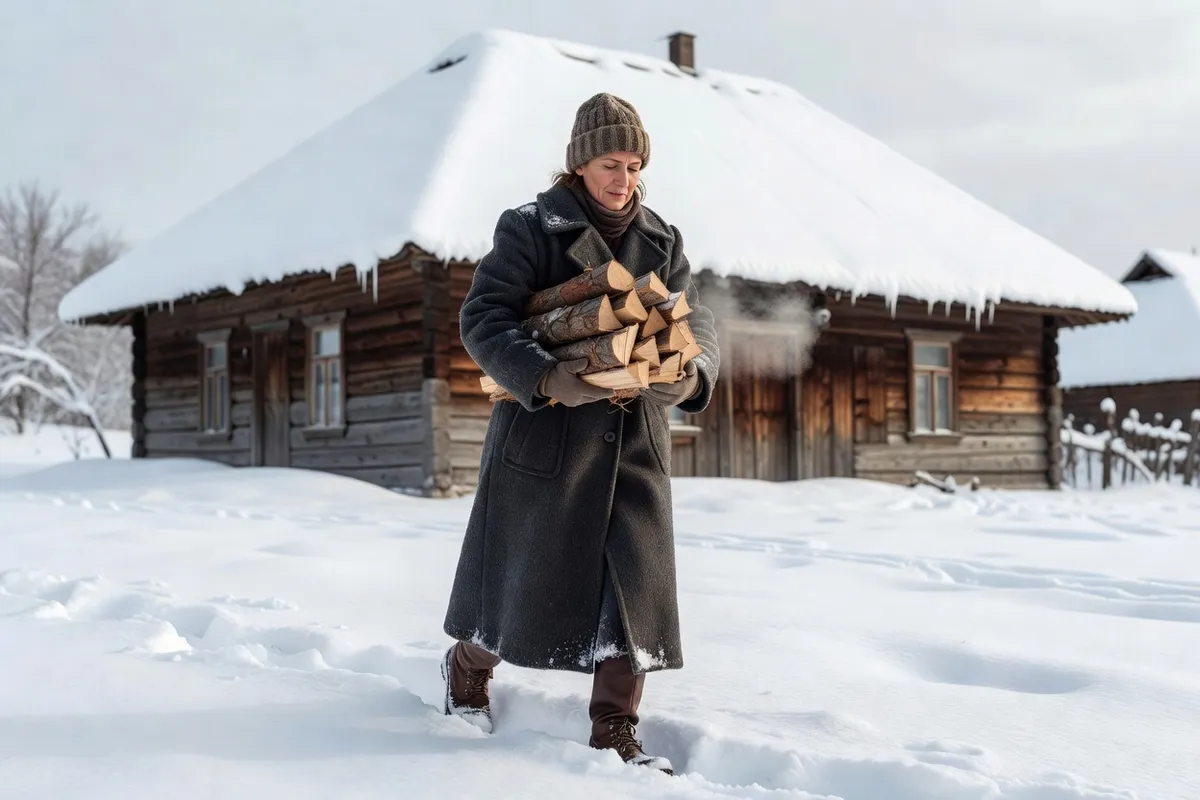
On sheepskin, a single sentence is all the sources allow. The Romanian Peasant Museum in Bucharest says that its costume collections have a part given over to heavy fur and felt clothing, sheepskin coats. The museum documents its collection, not what is worn today, and none of the sources read here gives a measured warmth rating for sheepskin, so this page makes no performance claim about it.
Feet first: footwear in damp cold
Feet deserve their own section. The guidance that Canada publishes on footwear is mostly written for workers, but its reasoning travels. For demanding work in the cold, CCOHS singles out a felt-lined boot with a rubber sole, a leather upper and a removable felt insole, since leather lets perspiration escape. It also cautions about the downside of total waterproofing: the foot is kept clear of slush and icy water, yet its sweat stays inside, so socks and insulation get damp earlier and frostbite becomes more likely.
Put that beside a Bucharest day that finishes above freezing. When the maximum reaches 2.8 °C on average, snow can turn to meltwater by afternoon, and a boot that keeps water out is useful. A boot that is also sealed against sweat becomes a problem on a long, active day. The honest conclusion is a trade-off rather than a rule: match the boot to the activity, and keep a dry pair of socks within reach.
Fit matters as much as material. CCOHS advises a fitting with the actual socks you will wear: overly thick ones get flattened inside the boot, stop insulating and press on the foot, so blood flows more slowly and cold injury becomes likelier. Our guide to winter boots for the Canadian climate goes through that fit check and the temperature ratings printed on boots, and the page on boot care and cleaning covers what to do with a pair that has been soaked.
Three typical situations
None of the three below is a personal account. Each is a situation type built from the dated figures above, with Canadian guidance applied to them.
A January morning in the capital
Take the WMO's mean figures at face value: -4.8 °C at dawn, 2.8 °C in the afternoon. The plan that follows from the CCOHS guidance is a wool or synthetic base layer, one insulating mid layer that opens easily, and a shell that blocks wind. A hat and mittens or insulated gloves complete it. Environment and Climate Change Canada (ECCC) advises removing a layer before you start sweating, which is the practical payoff of the three-layer approach on a day that warms by nearly eight degrees.
If a wind picks up, the reading to check is the wind-chill index. ECCC's guidance for the lowest risk band, 0 to -9, is simply to dress warmly and stay dry. The footwear choice follows the trade-off above: a water-resistant boot for the wet hours, with dry socks for the evening.
A cold snap under polar air
Now suppose a night of the kind that continental polar air can bring. The Romanian sources read here give no figure for how often that happens or how low it goes, so the numbers below illustrate the Canadian wind-chill chart, not Romanian records. At -10 °C, ECCC's chart gives a wind chill of -18 with a 20 km/h wind and -21 with a 40 km/h wind. Those values fall in the moderate band, -10 to -27, where ECCC's scale warns of discomfort and a risk of frostbite and hypothermia for people outdoors a long time without adequate protection.
The advice reproduced by CCOHS from Environment Canada for that band is to dress in layers under a windproof shell, add a hat, mittens or insulated gloves, a scarf and insulated waterproof footwear, and stay dry and moving. ECCC adds that wind chill leaves the air and objects at their real temperature: it measures the chill that bare skin feels when cold and wind act together, and no thermometer will display it. For the traveller, the lesson is that the number on the forecast and the number on the face can differ by ten degrees or more.
Hours of work outdoors, or a long walk uphill
The third situation is about effort. Carrying firewood, clearing a path or climbing a hillside generates heat, and sweat is the enemy of insulation. CCOHS's heavy-work boot, with its felt liner and leather upper, was designed around that problem, and its warning about waterproof boots applies in full. The practical sequence is to start slightly cool, open or remove a layer before sweating begins and put it back on at every stop.
Health Canada adds a point that matters on any long outing: frostbite generally affects the parts furthest from the heart, meaning hands, feet, nose and ears, and its advice on extreme cold includes changing out of wet clothing quickly. For anything higher than the city, the sources read give no mountain temperatures, so the plan has to rest on a local forecast and a wind-chill check made that morning.
There and here, side by side
The table sets the Bucharest figures against the 1991-2020 climate normals for Winnipeg and Montréal from Environment and Climate Change Canada. The periods and stations differ, which is why the comparison is a guide to scale, not a ranking. A dash means that the sources read for this page give no figure.
| Topic | There | Here |
|---|---|---|
| January mean temperature | -0.9 °C, Bucharest-Filaret, 1961-2025 (ANM) | Winnipeg: -16.3 °C; Montréal: -9.2 °C (1991-2020) |
| January mean daily minimum | -4.8 °C, Bucharest, 1981-2010 (WMO) | Winnipeg: -21.2 °C; Montréal: -13.5 °C |
| January mean daily maximum | 2.8 °C, Bucharest, 1981-2010 (WMO) | Winnipeg: -11.4 °C; Montréal: -5.0 °C |
| January days with a maximum of -10 °C or colder | No figure in the sources read | Winnipeg: 17.0 days; Montréal: 7.6 days |
| January days with a maximum of -20 °C or colder | No figure in the sources read | Winnipeg: 5.3 days |
| Snow in January | No figure in the sources read | Montréal: 15.4 days with at least 0.2 cm, 52.0 cm on average |
| What the climate asks of the wardrobe | Layers that adjust to a day crossing freezing | Layers plus insulation that holds through days that never reach it |
Read the first three rows and the gap is clear. Bucharest's mean daily maximum, 2.8 °C, is 7.8 degrees above Montréal's -5.0 °C and 14.2 degrees above Winnipeg's -11.4 °C. At the other end of the day, the mean minimum is 8.7 degrees warmer than Montréal's and 16.4 degrees warmer than Winnipeg's. The Montréal normals and the Winnipeg normals are published station by station, so the same comparison can be run for any other Canadian city.
The days-at-or-below row explains why the wardrobes differ in kind, not only in degree. In Winnipeg, on average, 17.0 January days never climb above -10 °C, and 5.3 do not climb above -20 °C. A Montréal January has 7.6 days at -10 °C or colder. In those conditions the question is how to retain heat for hours, and the answer leans on insulation, wind protection and covered skin. In a month that averages near freezing, the question is how to stay comfortable as the temperature swings, and the answer leans on adjustability.
What a Canadian reader can take from it
A Canadian packing for a winter trip to Romania can hold a few conclusions without much risk. They come from the figures and guidance above, not from a travel anecdote.
The first is to leave the heaviest parka at home unless mountain plans call for it. On the averages, Bucharest in January is warmer than Montréal's January by roughly eight degrees on the daily mean, and the sources read give no reason to expect arctic conditions in the capital. The second is to pack for variation: a base layer of wool or a synthetic fibre, one or two middle layers that open easily and a shell that stops wind. Cotton belongs in the suitcase only as something to wear indoors.
The third concerns feet. Boots with enough insulation for a long walk, worn with the socks used at the fitting, handle most days. A pair that is waterproof and sealed will keep out meltwater and hold in sweat, so a spare pair of socks is worth the space. The overview of sheepskin boots explains what the material does and does not claim to do, and it stays within what sources document.
The fourth is the wind. Whatever the thermometer says, check the wind-chill reading in the morning and again if the plan includes open ground. Both ECCC and Health Canada tie the risk of frostbite to wind chill, and Health Canada points out that a wind chill under -27 raises the danger of windburn and frostbite.
The fifth is caution about the sources. This page rests on a national weather service, the WMO, a national museum and Canadian guidance. It does not rest on a visit, a test or an anecdote, and it does not cover the Carpathians in numbers. Anyone who plans a trip should confirm forecasts and conditions with Romanian sources close to the date.
Frequently asked questions
How cold is Bucharest in January?
Romania's National Meteorological Administration gives a January mean of -0.9 °C at Bucharest-Filaret (1961-2025). The World Meteorological Organization lists a mean daily minimum of -4.8 °C and a mean daily maximum of 2.8 °C (1981-2010). Averages hide cold snaps, so pack for a wider range.
Is a Romanian winter colder than a Canadian one?
On the figures read for this page, no. Montréal's January mean is -9.2 °C and Winnipeg's is -16.3 °C (Environment and Climate Change Canada, 1991-2020), against about -0.9 °C in Bucharest. The periods and stations differ, so treat the gap as a reasonable order of magnitude, not a precise measurement.
What about the Carpathian Mountains?
The sources consulted give no mountain temperatures, so this page states none. Check the national meteorological service for the exact area and altitude, and use a wind-chill chart before heading out, since exposed ground is windier and colder than a city.
What do people wear in winter in Romania?
This page does not claim a street survey. It describes what the climate asks of a wardrobe: several thin layers, wool or synthetic next to the skin, a wind-resistant outer layer, a hat, mittens and dry, insulated footwear, following Canadian occupational-health and public-health guidance.
Is sheepskin still part of Romanian winter clothing?
The Romanian Peasant Museum says its costume collections include thick garments of fur and felt, among them sheepskin coats. It documents the collection, not current habits, and the sources read give no measured warmth for sheepskin, so none is claimed here.
Sources
Verified on
- Administrația Națională de Meteorologie, Caracterizare climatologică multianuală 1961-2025 : Ianuarie, ANM, 2025.
- Organisation météorologique mondiale, World Weather Information Service : Bucharest, OMM, 2026.
- Muzeul Național al Țăranului Român, Costume (Port), Muzeul Național al Țăranului Român, Bucarest, 2026.
- Environnement et Changement climatique Canada, Canadian Climate Normals 1991-2020 Data: MONTREAL TRUDEAU (AIRPORT), Gouvernement du Canada, 2025.
- Environnement et Changement climatique Canada, Canadian Climate Normals 1991-2020 Data: WINNIPEG RICHARDSON (AIRPORT), Gouvernement du Canada, 2025.
- Centre canadien d'hygiène et de sécurité au travail (CCHST), Cold Environments - Control Measures, Centre canadien d'hygiène et de sécurité au travail (CCHST), 2025.
- Environnement et Changement climatique Canada, Wind chill and the Wind Chill Index, Gouvernement du Canada, 2025.
- Santé Canada, Extreme cold (It's Your Health), Gouvernement du Canada, 2021.