

Raymond Lachapelle
boot repairer in Montréal
This interview is with an expert imagined for this guide.
Start with the part of the boot that's giving you trouble. A white line after a slushy walk calls for a look at the care instructions; leather that opens at a bend or a sole that pulls away calls for a closer inspection. Resoling makes sense only if the rest of the boot can support the work. Raymond Lachapelle, a boot repairer in Montréal and an expert imagined for this guide, explains how to tell a cleaning job from a repair worth discussing.
What a white line can tell you
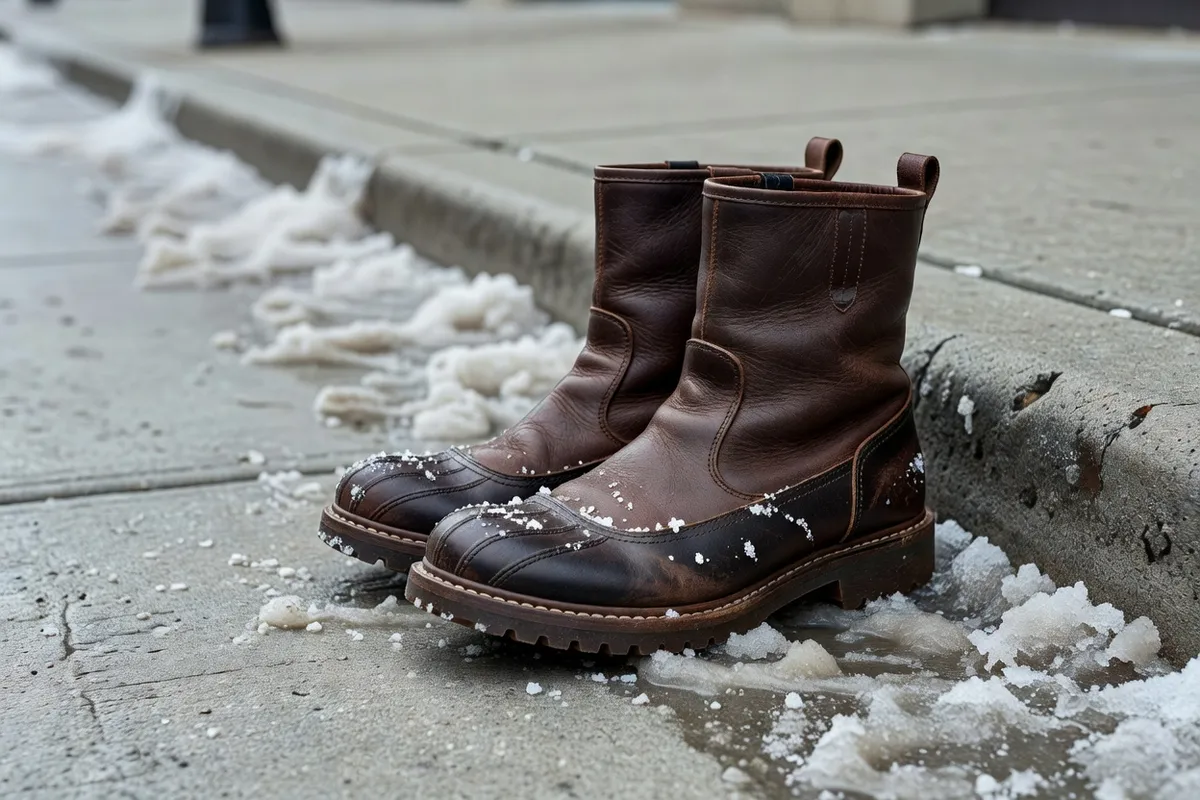
A pale line appears along the toe after a walk through slush. Is that already damage?
Look at what the line crosses. If it runs over a smooth panel and the surface still looks continuous, the immediate question is how to clean that panel. If it runs right along the join between the upper and the sole, look at the join as well as the mark. Does the edge sit flush, or can you see a gap? A pale line isn't proof that the edge is lifting, and getting the line off won't close a gap that's already there.
I'd look at the pair together. A band of discolouration on both toes tells you where to start looking. A mark that follows a bend on just one boot gives you a more specific spot to show a repairer. You don't have to name the deposit or establish what caused it. A description like “there's a pale band across both toes, but this side also looks open” is more useful than calling the whole boot salt-damaged.
Editorial note: Environment and Climate Change Canada's road-salt overview (2023) explains that road salts are used to remove ice and help prevent its formation during winter road maintenance. The department's code of practice (2022) covers several chloride salts, including sodium and calcium chlorides, as well as brines and other additives. Neither document assesses footwear damage. The guide to dressing for Montréal slush looks at boots, soles and socks together for days when wet conditions shape what you wear.
Cleaning comes before judging the finish
Can I deal with the mark at home without making a possible repair harder?
Start with the care directions for the pair in front of you. The toe and the trim around the sole don't necessarily have the same finish, so don't carry a cleaning instruction from one surface to the next without checking. If the directions don't cover the affected area, ask how to handle it rather than trying several products. If you plan to bring the boots in, say what you've already applied. That gives the repairer a clearer starting point than a finish you've tried to even out just before the visit.
Keep the cleaning question narrow: can you remove the surface deposit by a method intended for this boot? Judge what remains once the boot is dry. A shift in colour, a line in the leather and an edge that visibly stands away from the upper are different observations. There's no need to make the boot look tidy before showing someone the last of those.
Editorial note: Manitobah's FAQ (2026) warns that salt can damage its footwear even after a protector has been sprayed on. Pajar's care guide (2024) describes staining, corrosion and possible loss of waterproofing; it advises testing a water-and-white-vinegar spot treatment on a hidden area first. Kamik's care FAQ (2026), by contrast, tells owners to rinse its boots with lukewarm water after winter or heavy use, let them air-dry at room temperature away from heaters, and keep them out of the washing machine. These directions come from different makers and aren't interchangeable. The guide to removing and preventing salt stains takes a closer look at the cleaning question.
A crease isn't always a split
How do you judge a line in leather that looks as though it might crack?
I like to see the spot with the boot resting naturally. Look at where the line starts and ends. Is it a shallow fold across the part of the boot that bends when you walk? Does it look open at rest? Does it run right up to a seam? Those details are more useful than how dark it looks. You don't need to bend the boot back hard to get an answer. Show the repairer the line and describe what you see when the boot moves normally.
It helps to say what you want to save. If the line bothers you because it's visible, that's a question about the finish. If the leather looks split, ask what can be done about the opening and what you'll still see afterwards. Those are separate conversations. The same goes for a boot that also has a worn heel: replacing what's underneath doesn't answer what's happening across the toe. I'd want to look at that leather before talking about sole work.
Editorial note: For leather boots, Pajar's maintenance guide (2024) recommends a mild soap, air-drying out of direct sun, then a leather conditioner and a waterproofing treatment. The maker says direct sun can fade or crack leather and recommends conditioner to restore suppleness. That's care guidance, not a way to determine what caused a particular line or a promise that treatment will close a split. If you're unsure whether the advice applies to your pair, check with the maker before treating the spot. A cleaner-looking boot isn't necessarily in better shape at the bend.
Read the wear from the inside out
A boot no longer feels right underfoot. What do you check before calling it a sole problem?
Show me where you feel the difference when you stand in the boot, then show me the same area from underneath. A spot that feels different under the heel isn't, by itself, a request for new tread. The part your foot rests on, the surface that meets the pavement and the edge joining the sole to the upper each deserve a look. It's easier to ask about an individual part once you can point to it.
| What you notice | Where to look | What to ask |
|---|---|---|
| A change in how the boot feels under the foot | Inside the boot, at the insole | Is this an insole issue, and is that part replaceable on this pair? |
| An area of tread that looks worn | Underneath, on the outsole | Is the wear local, or does the whole sole need attention? |
| An edge that stands away from the boot | At the join between the upper and the sole | Is this a local separation, or is there more to assess around the edge? |
Bring the other boot even if it feels fine. It's a useful comparison for the shape of the heel and the way the edge sits, but it's not a reference for what the pair looked like new. Both boots may need a look. I'd rather compare them on the bench than assume the quieter one has nothing to tell us.
Editorial note: In its industrial-boot maintenance guide (2024), Baffin advises checking for worn soles and loose stitching and dealing with damage promptly. It also says many of its boots have replaceable insoles. That doesn't establish that their outsoles can be replaced.
What makes a worn outsole a candidate for resoling?
The first thing I'd ask is what there is to work with after the worn part comes off. Is there a sound edge to attach something to? Is the upper in good enough shape to keep wearing? Is there a replacement that fits the boot rather than just looking right from below? A boot can have plenty of leather left and still be a poor candidate if the way the sole is built doesn't leave a workable attachment. A boot that looks rough from the outside can still be worth examining if the wear is concentrated underneath.
The outside doesn't always tell the whole story. A visible line of stitching is something to look at, not a verdict on whether the sole can come off and be replaced. Likewise, a neatly moulded edge doesn't tell you what a particular repairer can do with the boot. A photo of the underside and another of the side can help start the conversation, but I'd be cautious about a firm answer without seeing where the parts meet.
I would also ask what the repairer means by resole. Does the proposal cover the entire outsole, or is it work on a particular area, such as the heel? If the replacement has a different tread or profile, ask to see what is proposed and how it will sit on the boot. You don't need a copy of the original for the discussion to be useful, but you do want a clear description of the change. Even a sound repair is the wrong job if it fixes the heel and leaves the problem you came in for untouched.
Where the repair stops
When does a new sole stop making sense, even if one could be fitted?
If the upper opens at a bend and the lower edge is coming away elsewhere, I wouldn't discuss the worn tread in isolation. The question is what you'd have left once that work was done. If the answer is a boot with a new underside and an upper you still can't use the way you want, a resole hasn't solved the problem. That's different from a scuff you don't mind living with. It's worth distinguishing the marks you can accept from the faults that would put the pair back by the door.
Dampness is a good example. Say you notice a damp patch after walking on a slushy surface and you also see a worn spot under the heel. Show where the dampness appeared inside and where the wear is outside. Don't assume they're connected. A worn spot is visible; the source of the dampness may not be. Ask which fault the proposed work addresses and what it leaves uncertain. I wouldn't promise that a new sole will restore waterproofing just because the old one looks worn.
Sometimes the useful answer is that the repair can be done, but not to the result you need. A pair you want for short outings on dry days presents a different question from a pair you rely on for wet walks. Tell the repairer which job the boots need to do. Then ask where the repair would stop: at the sole, at a local opening, or short of making the boot suitable for that use. Being able to attach a piece isn't the same as making the whole boot worth putting back into service.
Before anyone reaches for glue
Should the maker hear about a lifting sole before a repairer touches it?
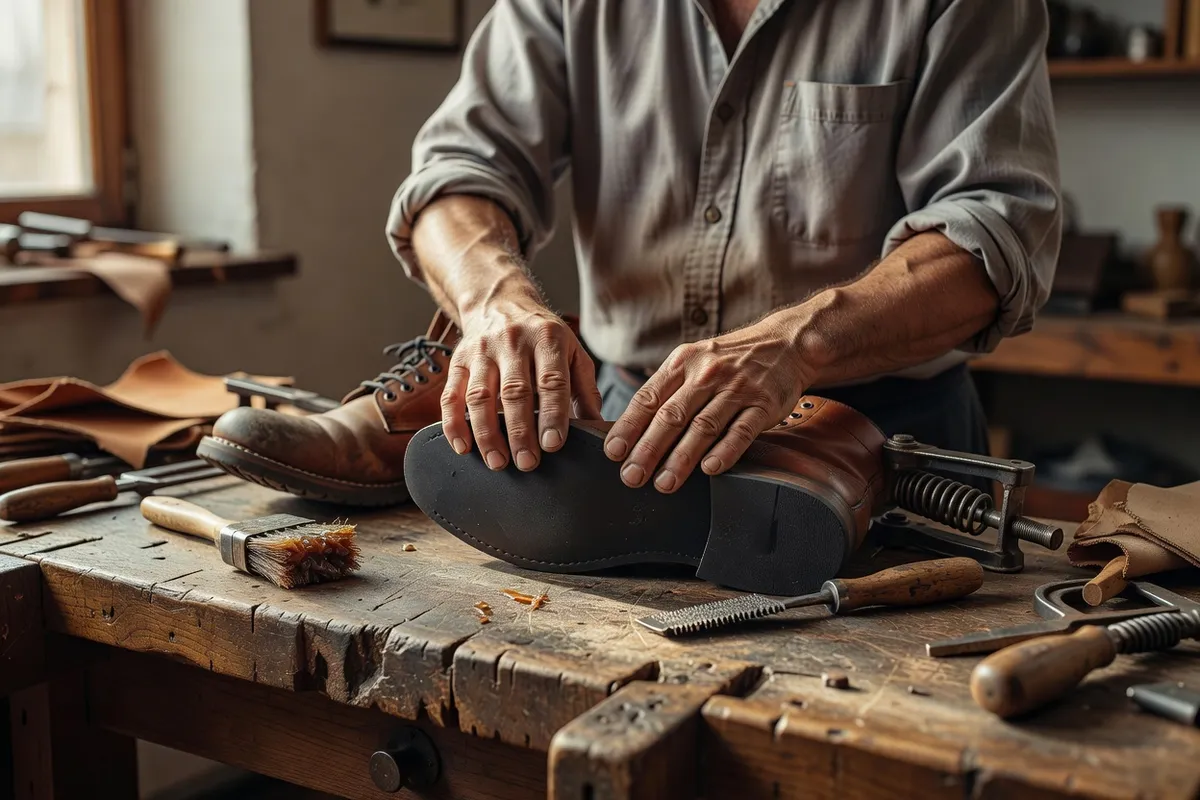
If you suspect a defect rather than wear, ask the maker what it wants to see before changing anything. You don't have to decide which explanation is right. Take a clear picture of the opening and another that shows where it is on the boot. Keep the purchase information handy if you have it. If you've used a treatment or tried to stick the edge down, say so rather than trying to cover it up. A repairer can discuss what's physically possible; the maker can explain what it asks for when someone reports a problem.
Editorial note: Kamik's FAQ (2026) recommends taking repairs to a cobbler and warns that home fixes, adhesives and modifications can damage materials and may void its warranty. Manitobah's FAQ (2026) describes coverage for defects in materials and manufacturing, excluding excessive wear and use outside the intended purpose. Baffin's warranty (2026) covers manufacturing defects subject to its terms and excludes wear and tear and modifications, among other things; the maker says it may still offer some help with damage outside coverage. Check the terms with the maker rather than treating these examples as a ruling on any particular pair.
The distinction also matters when reading a company's care page. A recommendation to consult a cobbler is not a promise that the company will resole the boot, or that a cobbler will be able to. The guide to Canadian boot makers gives readers a starting point for looking up maker-specific information. For the pair at hand, ask about the exact damage and the model, not just the brand.
Make the visit count
What should I bring, and what should I ask before agreeing to work?
Bring both boots and describe the fault in ordinary language. “The edge lifts on this side” is enough to start. If the issue is how the boot sits or feels with your usual winter socks, bring those along too. If the pair has removable inserts that you wear with it, leave them in or bring them separately so you can show how you use them. Mention any cleaning product or previous repair you know about. None of that requires you to diagnose the boot yourself.
Have the repairer point to the part that would be changed and the part that would stay. If you're offered work on the heel, find out whether the rest of the tread will be left as it is. If the proposal is to reattach an edge, ask what the repairer can see about the condition of the material at that edge. If there's a reason the full extent of the damage can't be judged yet, ask what happens if more turns up once work starts. You can agree on what needs a separate conversation before work goes further.
By the end of the visit, you want an answer you could repeat in a sentence: “This addresses the worn heel; it doesn't address the split at the toe.” That's more useful than hearing that the boots are generally repairable. It also gives you a way to decide which work to authorize. If the unchanged part is what made you stop wearing the pair, talk about that before committing to anything else.
What deserves a look before the boots go away for the season?
Set the pair side by side after the cleaning and drying called for by the maker. Look at the bends in the uppers, around the edges and under the heels. Then think back to what made you reach for another pair. Did one boot feel different? Was there an opening you had been meaning to get looked at? A close look is only half the exercise; remembering why you stopped wearing the boots tells you what to ask about.
A pair you're keeping for a different kind of winter day doesn't have to do the job of the pair you wear most often. But give it a specific role rather than putting it away on the assumption that you'll sort it out when the weather turns. The comparison of mukluks and sheepskin boots is a starting point for thinking about what you expect from different winter footwear. For the pair under inspection, decide on its next use before deciding on its next repair.
Editorial note: Pajar's care guide (2024) suggests having a local shoemaker look at the boots before they're put away, so damage that needs attention can be spotted. It recommends storage in a dark place that stays cool. That advice is about timing, not a verdict that every worn boot needs work.
If a line across the toe is all that's left and the boot still does what you need, the answer may be to leave it alone. If the same edge is still visibly opening, put the pair aside for an assessment rather than treating the opening as a stubborn stain. Decide which problem you're dealing with before you put the boots away.
Frequently asked questions
Does a white salt mark mean the leather is ruined?
No. The mark alone does not tell you whether the leather or the join at the sole is damaged; check the boot after cleaning and drying it as directed.
Can leather conditioner close a crack?
Pajar recommends conditioner to restore suppleness to leather, but a softer finish is not the same as a repaired split.
Can any winter boot be resoled?
No. A repairer needs to assess how the sole is attached, what remains sound and what replacement can be fitted.
Is a new insole the same as a resole?
No. An insole sits under the foot inside the boot; a resole concerns the sole on the outside.
Should I ask the manufacturer or the repairer first?
If you think the damage may be a defect, check the manufacturer's instructions before authorizing a repair or applying a product.
Sources
Verified on
- Environnement et Changement climatique Canada, Road salts overview / Aperçu sur les sels de voirie, Gouvernement du Canada, 2023.
- Environnement et Changement climatique Canada, Code of Practice for the Environmental Management of Road Salts / Code de pratique pour la gestion environnementale des sels de voirie, Gouvernement du Canada, 2022.
- Manitobah Mukluks, Frequently Asked Questions (FAQ), Manitobah Mukluks, 2026.
- Pajar, Cleaning Winter Boots: A Pajar Maintenance & Care Guide (5 août 2024), Pajar, 2024.
- Kamik, FAQs (Product Care & Use), Kamik, 2026.
- Baffin, Essential Tips for Maintaining Your Industrial Boots (7 août 2024), Baffin, 2024.
- Baffin, Warranty, Baffin, 2026.