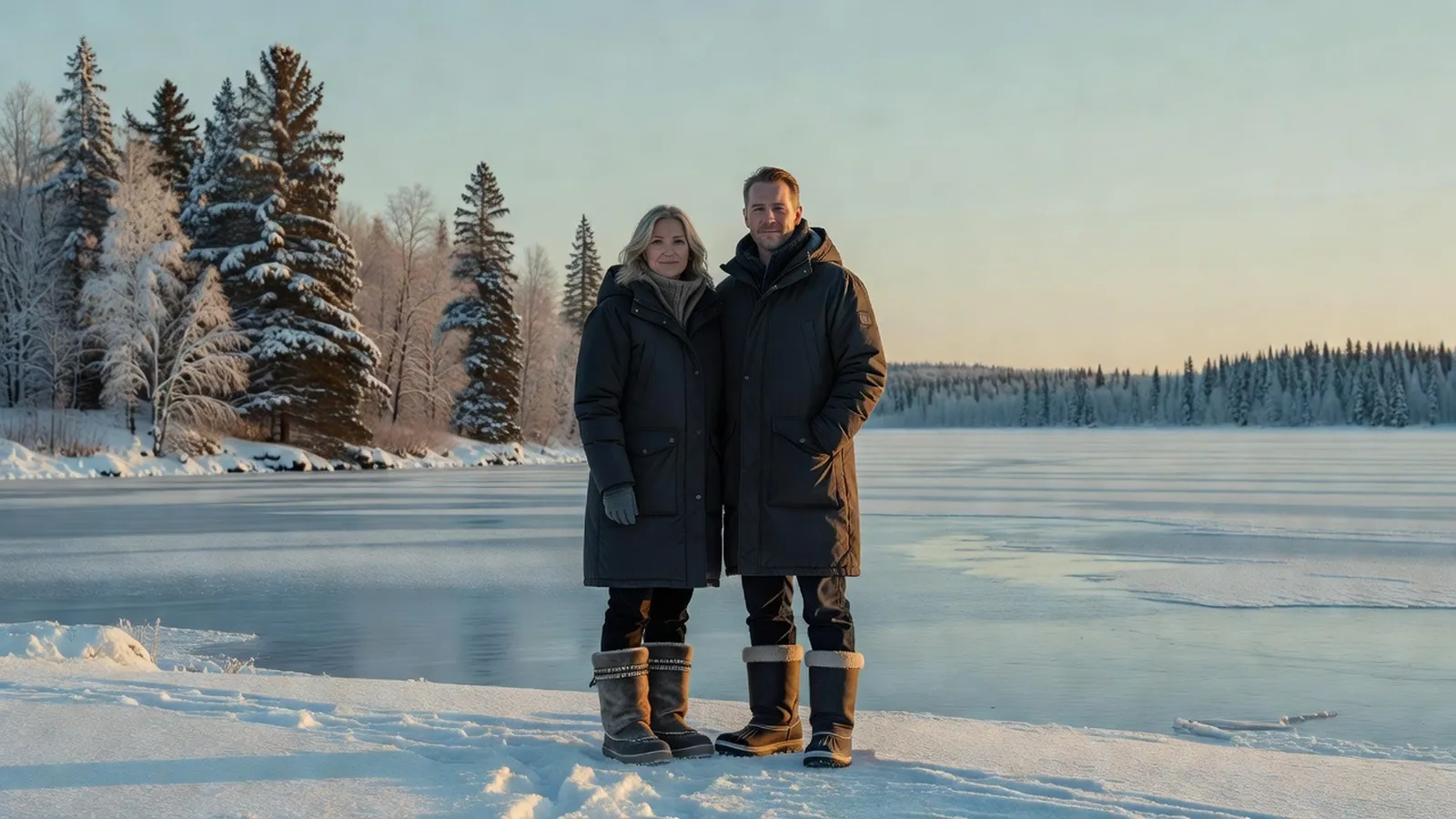
Neither type wins everywhere. Mukluks are soft, flexible boots built for dry, deep cold, while sheepskin boots add a wool lining that traps air and cushions the foot. Manitobah limits its rating to cold, dry weather, Steger Mukluks ties its colder rating to a larger, wider size, and Cougar says ratings move with how active you are. In wet slush, how a boot handles moisture matters more than its headline temperature. This guide compares both families, using named makers and their own published claims.
What counts as a mukluk, and what counts as a sheepskin boot?
The two words overlap more than people expect, which is why comparisons go sideways. The Canadian Encyclopedia describes mukluks as soft hide boots that Inuit designed to move easily and stay warm in the North, and traces the word to the Yupik maklak, the bearded seal. The same article says European traders adopted them in the 17th century and that modern styles often come with rubber soles. The Canadian Encyclopedia entry on mukluks is a good place to see how far the modern product has travelled from its origin.
Today the word covers a range. Some mukluks are close to the traditional idea: a supple upper, a thick liner, a flat and flexible sole. Others are hybrids with canvas, a treaded rubber outsole and a felt liner. Sheepskin boots, in turn, are defined by their lining or their whole construction: the fleece faces the foot, and the outer is usually suede or leather. The categories meet in the middle. Manitobah says sheepskin shearling lines the footbed of most of its mukluks and of some of its moccasins, so a mukluk can contain sheepskin without being a "sheepskin boot" in the usual sense.
A useful way to keep things straight is to ask three separate questions about any pair: what is the lining, how stiff or supple is the sole and upper, and is the outer sealed against water. A mukluk with a wool felt liner and a canvas upper answers those questions very differently from a leather boot with a full shearling lining and a stitched, sealed seam, even though both get sold as winter footwear. The rest of this guide uses those three questions rather than the labels.
How do feet actually stay warm in cold weather?
Heat leaves the foot in a few predictable ways: through the sole into cold ground, through the upper into cold air, and through moisture that conducts heat away once it reaches the insulation. Wind adds to the cold the body feels. Environment and Climate Change Canada defines wind chill as the cold felt on exposed skin from temperature and wind together, and notes that it cannot be read on a thermometer. Boots cover the skin, so the index does not describe the foot itself, but it explains why a calm minus-twenty morning and a windy one feel so different on the way to the bus.
Insulation works by holding still air. Woolmark explains that wool's natural three-dimensional crimp traps small pockets of air, which insulates against the cold and keeps a drier microclimate next to the skin. It also states that wool is hygroscopic and can absorb up to 35 % of its weight before feeling wet against the skin, releasing some heat as it does. Those are statements from a wool-sector organization, so they deserve the same careful reading as any manufacturer's claim, but they match the logic that most felt, fleece and shearling liners rely on.
Then there is the point that the Steger Mukluks site puts at the centre of its philosophy. The company says flexibility, breathability and insulation are the keys to warm feet, and that a heavier boot is not necessarily a warmer one. Whether you agree or not, it is a useful corrective to the instinct of buying the bulkiest boot on the rack. A boot that compresses the foot, or that leaves no room for a second pair of socks to stay lofty, can lose its insulating value even if it is thick on paper. Steger's own history page sets out that view, along with the company's statement that it makes all its footwear in Ely, Minnesota.
Three things that decide the outcome
- Dryness inside and out. Wet insulation loses much of its value, and perspiration counts as moisture as much as slush does.
- Room to move. A sole that flexes and a fit that does not squeeze the toes keep blood moving, which in practice is what keeps toes warm on a long walk.
- Activity. Standing at a bus stop and walking briskly produce very different amounts of heat in the feet, and brands increasingly say so in their own rating notes.
What do the mukluk makers actually say about their boots?
Two makers give a clear picture of what a modern mukluk is. Steger Mukluks lists its Traditional style as full-grain leather with a water-repellent canvas upper, a wool felt liner lined with polypropylene, a wool felt insole and a rubber sole, with a weather rating of everyday wear to -30 °F. Its Arctic style is described as designed for major expeditions, with a rating of extreme wear to colder than -40 °F, a wool felt liner and a treaded rubber sole. The brand adds that those colder temperatures hold when you choose a larger, wider size, which is a sensible reminder that fit is part of the insulation. Both are the company's own ratings, not independent measurements. Product details are on the Traditional and Arctic pages of the maker's site.
Manitobah, based in Canada, describes a different emphasis. It says mukluks and moccasins with its Heritage fit are made without a traditional last, so the left and right boots are identical, and that the natural materials form to each foot over time. Its sheepskin-lined mukluks and boots, it adds, carry a rating of -32 °C (-25 °F) for cold, dry weather, though it is explicit that this is the maker's claim, not an independent test. The words "cold, dry weather" in that statement matter, and they come back in the next sections.
Reading the two makers side by side shows what the category promises and what it does not. A mukluk is supple, relies on liners of wool felt or sheepskin, and is rated for conditions in which the leather stays dry. None of that is a flaw. It is a design for a particular job: long, cold, stable days on snow that is not melting.
And what does the sheepskin side offer?
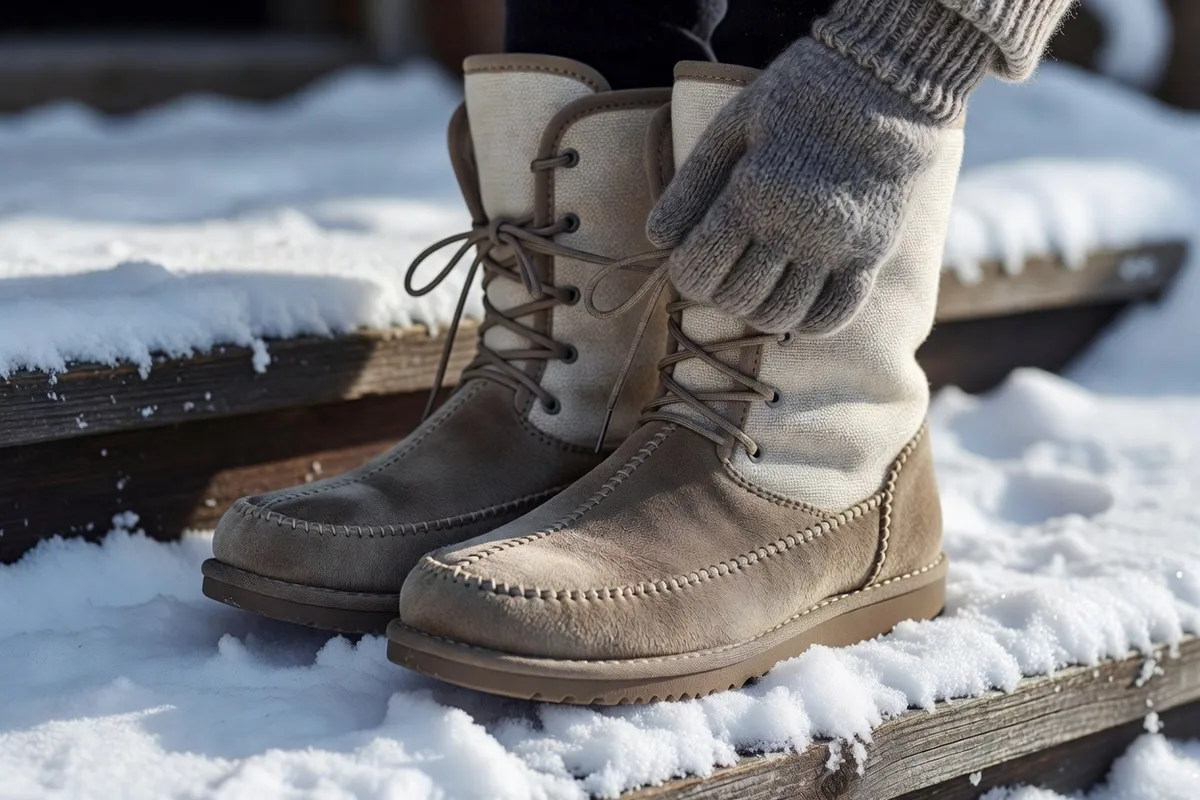
Woolmark's footwear toolkit holds that, for limiting how much heat escapes, nothing beats sheepskin boots: the fibre's natural crimp traps still air and slows the heat leaving the foot. That is a strong statement from an interested source, and it should be read as such, but it lines up with how fleece linings are commonly described by the boot makers themselves.
Pajar, a Canadian maker, frames the choice in a more practical way. It says genuine sheepskin (shearling) lining gives natural warmth, softness and breathability, and that it suits dry cold and all-day wear. Synthetic insulation, the brand adds, keeps performing when damp and dries faster. Its conclusion is regional: dry prairie cold favours shearling, while wet urban slush favours synthetic. The same maker says its Heritage Collection is handcrafted in Montréal with pre-treated waterproof leather and genuine sheepskin lining, made in the same Canadian factory since 1973. A Heritage-style boot therefore combines the two ideas, a sealed outer and a wool lining, which is exactly where the moisture question gets interesting. The full reasoning is on Pajar's winter boot advice page.
For readers who want the wool side in more detail, the guide on how sheepskin behaves at minus twenty goes through what the fleece does and does not do, and the broader sheepskin boots guide covers the category from construction to fit.
Side-by-side: how the two families compare on the points that matter
The table below sticks to what the makers and sources cited above actually state. It is a map of claims, not a ranking.
| Point | Mukluk-style boots | Sheepskin boots |
|---|---|---|
| Typical build | Flexible upper, felt or fleece liner, often a rubber sole (Steger, Manitobah) | Wool lining against the foot, leather or suede outer (Pajar) |
| How warmth is made | Insulating liner, supple fit, breathability | Wool crimp that traps air (Woolmark) |
| Stated ratings | Steger: everyday wear to -30 °F (Traditional), colder than -40 °F (Arctic); Manitobah: -32 °C in cold, dry weather | Rating depends on the individual maker and model |
| Moisture | Most Manitobah leather is untreated and not waterproof; sealed styles breathe less | Pajar: shearling suits dry cold, synthetic suits wet slush |
| Best match | Dry, very cold days with steady walking | Dry cold and all-day wear; wet conditions need a sealed or synthetic design |
| Care limits | No machine washing or drying, no heat above 90 °F (Steger) | Follow the maker's care guide; salt and water are the usual enemies |
Two lessons come out of the table. First, the categories are not opposites: a mukluk can have a sheepskin footbed, and a sheepskin boot can be built with a waterproof outer. Second, the row that varies most between real pairs is moisture, not warmth.
Why do a boot's temperature ratings fail to settle the question?
Rating numbers are tempting, because they look like measurements. In practice they are claims with conditions attached. Manitobah attaches "cold, dry weather" to its -32 °C figure. Steger attaches a larger, wider size to its colder-than-minus-40 °F claim for the Arctic style. Kamik's page for its Nation Plus men's boot states a -40 °C rating, a removable liner with 145 g HeatMX insulation and seam-sealed waterproof construction, and it is explicitly a model-specific brand rating. That is a boot with a removable liner rather than a mukluk or a sheepskin boot, which is a reminder that the label on the box and the rating on the tag can describe quite different constructions.
Cougar goes furthest in explaining the limits. The company says its temperature ratings depend on activity level and on blood circulation in the feet, that they are a guideline only, and that they are not covered by its warranty. As an example, it gives a boot rated at -40 °C as -30 °C at medium activity and -15 °C at low activity. The gap between those figures is the single most useful thing to know before comparing ratings across brands. If a boot is rated for movement and you will be standing still at a rink or a bus shelter, the real comfort threshold sits well above the printed number.
What can a reader do with this? Compare ratings only within the same maker's range, treat them as a ceiling for steady activity, and plan for the colder, still, windy scenario rather than the best case. Brand ratings are not independent tests, as Manitobah itself notes about its figure, and no source reviewed for this guide supplies a head-to-head measurement of mukluks against sheepskin boots. That absence is the honest answer to anyone asking for a single winning number.
Dry cold or wet slush: where each design does better
The most useful split is by conditions, and the sources agree on its outline. Manitobah explains that its non-waterproof suede and leather are porous and need to breathe to work in extreme cold, whereas its sealed waterproof styles are less breathable and can feel damp inside from perspiration. It adds that the greater part of its suede and leather carries no treatment and is not to be counted as waterproof; only the styles it labels waterproof are sealed. The maker's FAQ spells this out clearly, and it shows a trade-off that applies well beyond one brand.
The Canadian Centre for Occupational Health and Safety, writing about cold work, makes the same point from the safety side. Fully waterproof boots protect from slush and cold water, it notes, but they also stop perspiration from escaping, so insulation and socks get wet faster, which raises frostbite risk. That statement is made in a work context, and a casual walk to the corner store is not a shift outdoors, but the mechanism is identical. The CCOHS guidance on cold environments is worth reading if you spend long hours outside.
Put those pieces together and a pattern shows up. In dry, very cold air, a breathable boot with a wool or fleece liner lets moisture escape and keeps insulation lofty. In thawing slush, an unsealed leather boot soaks up water from outside, and a sealed boot holds sweat in. Neither is perfect, which is why Pajar proposes a synthetic lining for urban wet conditions: it keeps performing when damp and dries faster. Anyone who lives with real freeze-thaw cycles, in Montréal or Ottawa for example, will recognize the problem. The practical response is sometimes a second pair of boots rather than a single compromise pair, a point developed in the article on boots, soles and socks for Montréal's slush season.
Typical situations, read against the published claims
These are scenarios built from the sources above, not test results.
A clear, dry prairie morning with steady walking. This is the case the makers' ratings are written for. A breathable mukluk with a felt or sheepskin liner, sized with room for socks, is consistent with Steger's emphasis on flexibility and breathability and with Manitobah's "cold, dry weather" rating. Pajar's note that dry prairie cold favours shearling points the same way.
A mild, wet day with slush on the sidewalk. An unsealed leather boot is the weak point here, since Manitobah says most of its leather is not waterproof. A sealed boot will keep water out, but the CCOHS point about perspiration applies if the day is long. A synthetic-insulated, waterproof design fits the pattern Pajar describes.
Standing still at an outdoor event. Cougar's figures for low activity are the relevant yardstick: a boot rated for movement at -40 °C is given at -15 °C when activity is low. Whichever family you choose, plan on a rating well beyond the expected temperature, thicker socks within the boot's volume and a spare dry pair.
A cold commute with little walking. Short exposure favours convenience over specialization. Any boot with a sound sole and dry liner will do, and the useful question becomes how quickly the pair dries between uses.
What about fit, socks and the rest of the outfit?
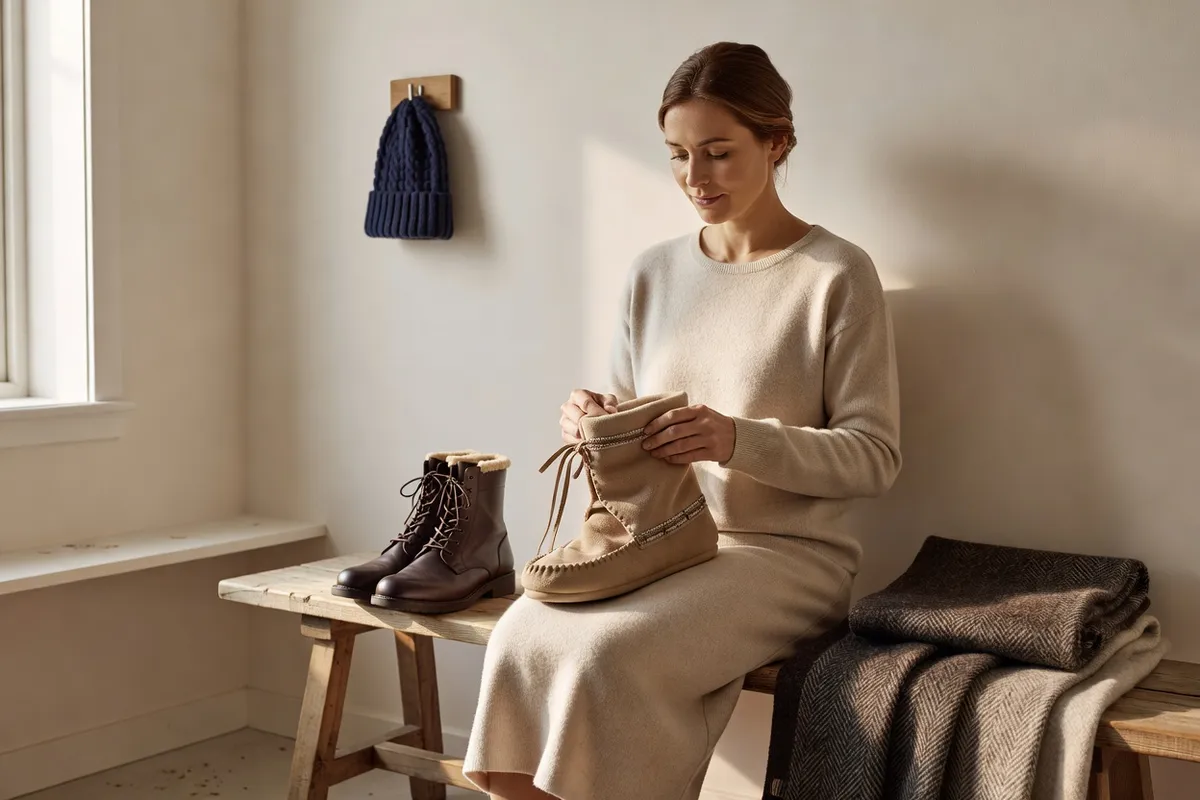
A boot is one layer in a system. The most generous liner cannot make up for a fit so tight that it restricts blood flow, which is why Steger ties its colder rating to a larger, wider size. Socks do the same job at a smaller scale: wool holds air and tolerates some moisture before it feels wet, as Woolmark describes, while a second thick pair crammed into a snug boot can undo the benefit. Trying boots on at the end of the day, with the socks you plan to wear, is a habit that costs nothing.
The rest of the body matters too. A hat, a good coat and gloves that actually fit often improve foot comfort more than a new pair of boots. The article on dressing for winter and layering lays out how the pieces work together, and the guide to winter boots for the Canadian climate shows where mukluks and sheepskin boots sit in the wider range, next to removable-liner designs such as the one Kamik describes.
One more variable is the floor under your feet. Modern mukluk styles often come with rubber soles, as the Canadian Encyclopedia notes. Hard-frozen compacted snow, ice glaze and wet salted pavement each ask something different of the sole, and an insulating liner will not help if the wearer is falling. Traction deserves as much thought as insulation.
How should you care for each type?
Care follows from construction. According to Steger Mukluks, machine washing, machine drying and dry cleaning are all off the table for its mukluks, and so is any exposure above 90 °F (about 32 °C), since too much heat damages them. That means no radiator, no hair dryer pointed at the liner and no tumble cycle after a wet day. The company's care and tying page explains how it recommends handling each pair, and it is the right reference for those models.
Sheepskin-lined boots call for the same restraint with heat, plus attention to road salt and its stains. The pages on boot care and cleaning and on removing salt stains from winter boots cover the practical side of these problems. For anything made by a specific brand, the manufacturer's own care page remains the first reference, because materials and sealing treatments vary from model to model.
How to choose between them, in plain terms
A few questions get most readers to a sensible answer.
- What are your typical winter days? If most are dry and below freezing, with a few thaws, a breathable mukluk or a shearling-lined boot is consistent with what the makers describe. If you live where thaws are frequent, look for a sealed outer and consider synthetic insulation, as Pajar does for wet urban slush.
- How active will you be? Read any rating through Cougar's lens: a lower activity level pushes the comfort limit upward by a lot. Walking briskly, standing at a rink and waiting in a car park are three different problems.
- Is the pair sealed or not? Manitobah's distinction between untreated leather and the styles it labels waterproof is the clearest in the sources. Choose on purpose, not by accident.
- Does it fit with real winter socks? A rating tied to size, like Steger's for the Arctic style, makes this more than a comfort issue.
- Can you dry it properly? A pair that you cannot dry between days will lose warmth over a week, whichever category it belongs to.
None of this requires a verdict that one family is superior. A mukluk with a felt liner, a shearling-lined leather boot and a sealed, removable-liner boot all have a legitimate place in a Canadian winter, and owning two kinds, one for dry, deep cold and one for thaw days, is a reasonable approach. If you want to continue from here, the Canadian winter boots pillar lists the other comparisons on the site, and the blog index gathers the articles on slush, salt and sheepskin together.
The short answer to the question in the title
Which keep feet warmer in a Canadian winter? On the evidence the makers themselves publish, the honest answer is: the pair that suits your conditions. Steger Mukluks, Manitobah, Pajar, Kamik and Cougar all frame their claims with conditions, whether that is dry weather, a larger size, a removable liner or an activity level. Mukluks tend to reward dry, cold, active days and a suppleness that sealed boots lack. Sheepskin boots offer wool's trapped-air insulation and a comfortable interior, and make the most sense where the cold stays dry. Wet slush favours a sealed or synthetic-insulated design, with the caveat that waterproofness traps sweat. Knowing this, the best choice is the one whose stated limits match your week.
Frequently asked questions
Are mukluks warmer than sheepskin boots?
Not as a rule. Mukluk makers such as Manitobah publishes a rating for cold, dry weather, Steger Mukluks ties its colder rating to a larger, wider size, and sheepskin boots rely on wool that traps air, which Woolmark says protects well against heat loss. The answer depends on dryness, wind, activity and fit more than on the boot category.
Can mukluks handle slush and wet snow?
Manitobah says most of its suede and leather is untreated and should not be considered waterproof, and that only styles labelled waterproof are sealed. For thawing city streets, a sealed or synthetic-insulated boot is usually the better match, as Pajar's advice on wet urban slush also indicates.
Do temperature ratings on winter boots mean the boot will keep my feet warm at that temperature?
Not necessarily. Cougar says its ratings depend on activity and on blood circulation in the feet, and gives a -40 °C boot as -30 °C at medium activity and -15 °C at low activity. Treat any rating as a guideline from the brand, not an independent test.
Why can a waterproof boot feel damp inside?
Manitobah explains that sealed waterproof styles breathe less and can feel damp from perspiration, and the Canadian Centre for Occupational Health and Safety notes that fully waterproof boots stop perspiration from escaping, so insulation and socks get wet faster.
Should I wash or dry mukluks with heat?
Steger Mukluks says not to machine-wash, machine-dry or dry-clean its mukluks, and not to expose them to temperatures above 90 °F (about 32 °C), because excessive heat damages them. Follow the care page of the maker of your pair.
Sources
Verified on
- René R. Gadacz, Mukluk, Historica Canada, The Canadian Encyclopedia, 2025.
- Steger Mukluks, Traditional – Steger Mukluks, Steger Mukluks, 2026.
- Steger Mukluks, Arctic – Steger Mukluks, Steger Mukluks, 2026.
- Steger Mukluks, About Us – Steger Mukluks, Steger Mukluks, 2026.
- Manitobah Mukluks, Our Product Manitobah, Manitobah Mukluks, 2026.
- Manitobah Mukluks, Frequently Asked Questions (FAQ), Manitobah Mukluks, 2026.
- Pajar, How to choose winter boots that keep you warm (Pajar Canada blog), Pajar Canada, 2026.
- Woolmark (The Woolmark Company / Australian Wool Innovation), Merino wool: Footwear (Treading lightly), Woolmark (The Woolmark Company / Australian Wool Innovation), 2026.
- Woolmark (The Woolmark Company / Australian Wool Innovation), Wool is naturally breathable, Woolmark (The Woolmark Company / Australian Wool Innovation), 2025.
- Steger Mukluks, How To Tie, Clean & Care, Steger Mukluks, 2026.
- Environnement et Changement climatique Canada, Wind chill and the Wind Chill Index, Gouvernement du Canada, 2025.
- Centre canadien d'hygiène et de sécurité au travail (CCHST), Cold Environments - Control Measures, Centre canadien d'hygiène et de sécurité au travail (CCHST), 2025.
- Kamik, NATION PLUS Winter Boots, Men, Kamik, 2026.
- Cougar Shoes Canada, Temperature Ratings, Cougar Shoes Canada, 2026.