
Winter boots are ready for storage when they are clean, completely dry, kept in shape and placed somewhere cool, dark and dry. Skip one of those steps and the damage usually shows in October: salt rings, a collapsed shaft, a musty lining or a few holes in the wool. Manufacturers such as Manitobah, Pajar, Steger Mukluks and Kamik each describe a version of the same routine, and this guide sets them side by side.
Why the end of the season matters more than the start
The first cold snap gets all the attention, yet the weeks between the last slush and the first warm weekend decide whether a pair lasts another winter. Boots carry salt, dirt and moisture into the closet, and a closet is a poor place to find out what they were hiding. Moisture trapped inside a lining turns into odour and, eventually, mould. Salt left on leather or suede keeps working long after the snow is gone.
Storage is also the best moment for an inspection. A boot sitting on a hallway mat in February is being used; a boot on a table in April can be turned over, flexed, smelled and looked at properly. The sources used here all treat the end of the season as a small maintenance project rather than a chore, and they list things to do in a sensible order. The order matters: cleaning before drying, drying before stuffing, stuffing before closing anything up.
A short word on scope. This guide covers the habits that makers and conservation bodies publish for boots, mukluks and wool. It does not replace the care sheet that came with your pair, and where a maker's advice differs from what follows, the maker's sheet wins for that boot. Several of the sources are aimed at other products (industrial boots, wool garments, textile collections), and each time that applies, the text says so.
First, a last look: what needs repair before the boots disappear?
Pajar's maintenance guide suggests visiting a local shoemaker before storing boots for the season, so that damage needing repair is spotted while there is still time to fix it. The logic is practical. A cobbler's queue is shortest in spring and summer, and a loose welt or a worn heel found in April costs nothing in lost wearing days. The same problem found in November means a pair that cannot be worn on the first snowy morning. For a conversation about what a repairer actually looks at, see the interview with a boot repairer on road salt, cracked leather and resoling, written with an expert imagined for this guide.
Steger Mukluks adds a second inspection: before storing, pull the liners out and examine them for wear, then note whether new liners or insoles will be needed for next year. Writing it down is the useful part. A note taped inside the box, something like "liners thin at the heel, insoles flat", turns next October's rummage into a quick purchase decision instead of a guessing game.
A quick walk-around before cleaning takes five minutes:
- Look at the soles for cracking, uneven wear or stones lodged in the tread.
- Check stitching and seams, especially where the upper meets the sole.
- Flex the boot gently at the ball of the foot and watch for cracks in the surface.
- Pull the insoles and liners out and feel them for compressed or bare spots.
- Smell the inside. A sour smell now means the drying step below deserves extra time.
None of this requires a verdict on whether a boot is finished. It simply produces a short list, and that list can wait in a drawer until the autumn.
Cleaning: get the salt and grime off before anything else
Dirt and salt should come off first, because drying a dirty boot only fixes the stains in place. Kamik tells owners of its boots to rinse dirt and salt off with lukewarm water after winter or heavy use, to remove the liners where possible, and then to let everything air-dry fully at room temperature. Notice what is absent from that sentence: no hot water, no dryer, no hair dryer.
Steger Mukluks is blunt about the opposite approach. Its mukluks should not be machine-washed, machine-dried or dry-cleaned. That is a reminder that "rinse with lukewarm water" is a rule for boots built to take it. A felt-lined, hide or sheepskin boot is a different object from a moulded rubber one, so the first job is to find out which kind is in your hallway. The maker's FAQ or care page is the quickest check, and the wording on the label inside the shaft often points to the same answer.
Salt deserves its own attention because it is the most stubborn thing a Canadian winter leaves behind. The method for lifting those white tide lines from leather or suede, and for keeping them from returning, is covered in the guide to salt stains on winter boots and how to prevent them. If the boots wear visible salt now, deal with it before you proceed to the drying step, not after.
What to leave out of the routine
A pattern shows up when the sources are read together. Heat and machines appear again and again as the things to avoid:
| Shortcut | What the sources say | Source |
|---|---|---|
| Washing machine or dryer | Not for mukluks; machine washing, machine drying and dry cleaning are all ruled out | Steger Mukluks |
| Heater, radiator or fireplace | Dry away from them; drying spot should be ventilated | Pajar, Kamik |
| Temperatures above about 32 °C (90 °F) | Excessive heat damages mukluks | Steger Mukluks |
| Car trunk in warm weather | Excessive heat can ruin the boots | Steger Mukluks |
| Direct sunlight in storage | Keep boots away from it; cool and dry preferred | Baffin |
Baffin's advice comes from a guide written for its industrial boots, so it is a reasonable benchmark rather than a rule for every product. The common thread is clear enough, though: cool, steady and moderate beats fast and hot.
Drying: slow, ventilated and out of the sun
Drying is the step where most seasonal damage is either prevented or created. Pajar says boots should be dried in a ventilated spot away from radiators and heaters, stuffed with crumpled newspaper or a boot shaper, and that proper drying prevents mould, mildew and odours. Kamik gives the same direction in different words: air-dry fully at room temperature, away from heaters or fireplaces. Manitobah's seasonal storage advice begins with cleaning and then letting boots dry fully, so the logic is consistent across brands.
Woolmark adds a small, helpful principle from the world of garments: dry wet wool at room temperature, away from direct sunlight or heat. It is advice for wool clothing rather than for boots, yet a shearling or felt lining is still wool, so the principle transfers sensibly. The underlying idea is that fibres dry best when nothing forces them.
How do you know a boot is dry? None of the sources gives a number of hours, and honest advice would be wrong to invent one. A thick lining dries more slowly than a thin one, and a humid April takes longer than a dry one. A practical test is to put a hand deep into the toe: if the surface feels cool or clammy compared with the room, wait. Pulling the liners out, as Kamik suggests, speeds things along because air reaches both the boot and the liner.
Airing also helps with odours. Woolmark's general wool advice mentions airing wool to remove smells; again, that is garment advice, so treat it as a reasonable parallel and not as a boot-specific procedure.
Stuffing and shape: keeping the shaft upright
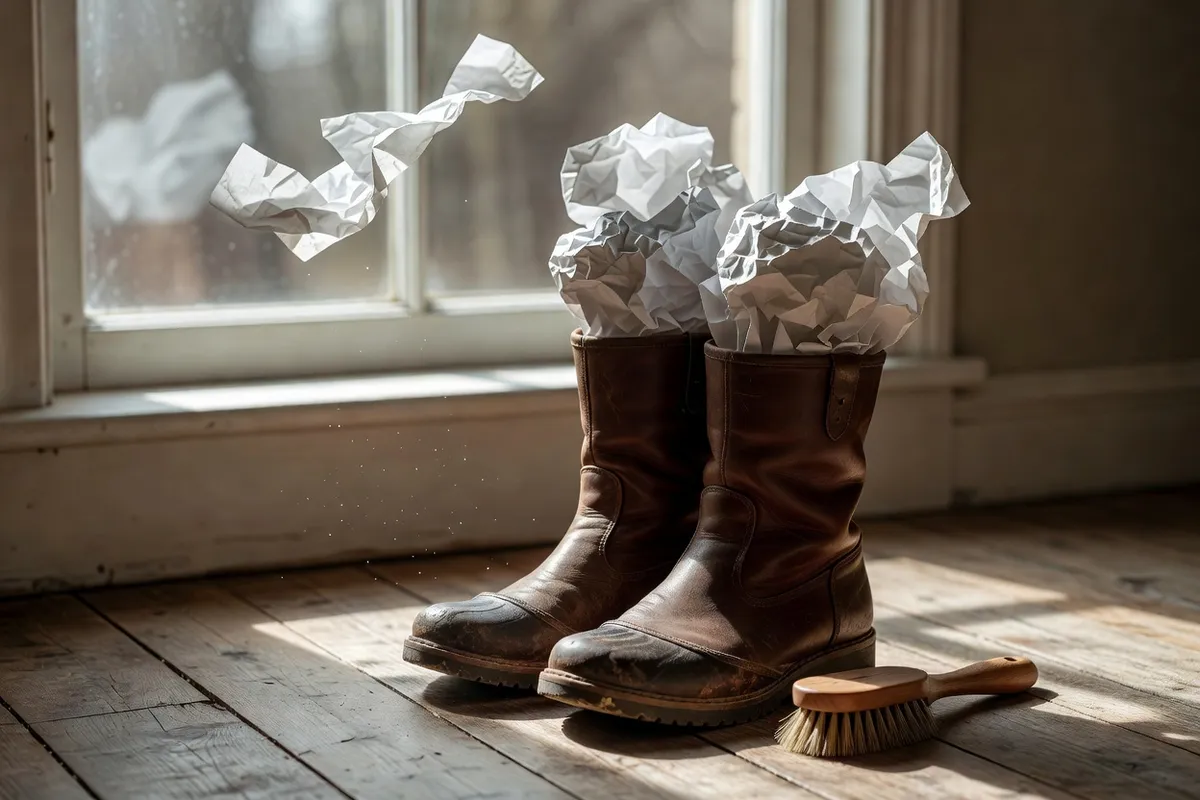
Pajar recommends drying boots stuffed with crumpled newspaper or a boot shaper. Baffin, in its guide for industrial boots, suggests boot trees or newspaper to keep the shape and absorb residual moisture. Manitobah suggests something in the shaft to keep it upright when the boots are packed away. Three makers, three slightly different settings, one consistent idea: a boot with nothing inside slumps, and a slumped shaft creases in the same place every year.
Crumpled paper has an extra job during drying, because it draws out the last dampness. Replace it if it feels wet, since a damp wad can leave the boot wetter than before. Once the boot is fully dry, a firmer support works better for the long months of storage. A boot shaper, a boot tree or a rolled towel all do the job in principle; the point is to hold the shaft upright without stretching the material.
A few practical choices:
- Use fresh paper for the first stuffing and swap it as it dampens.
- Fill the toe loosely so air can still move, and avoid cramming the shaft tight.
- Keep printed newspaper away from pale suede or light-coloured linings, where ink could transfer; plain paper is the safer pick there.
- Make sure the paper is removed before the boots go into a closed container, or replaced with a dry support.
The third point is plain caution rather than anything taken from a maker's page. No source tested it, so treat it as common sense and not as an official rule.
Where and how to store them: containers, boxes and the plastic bag question
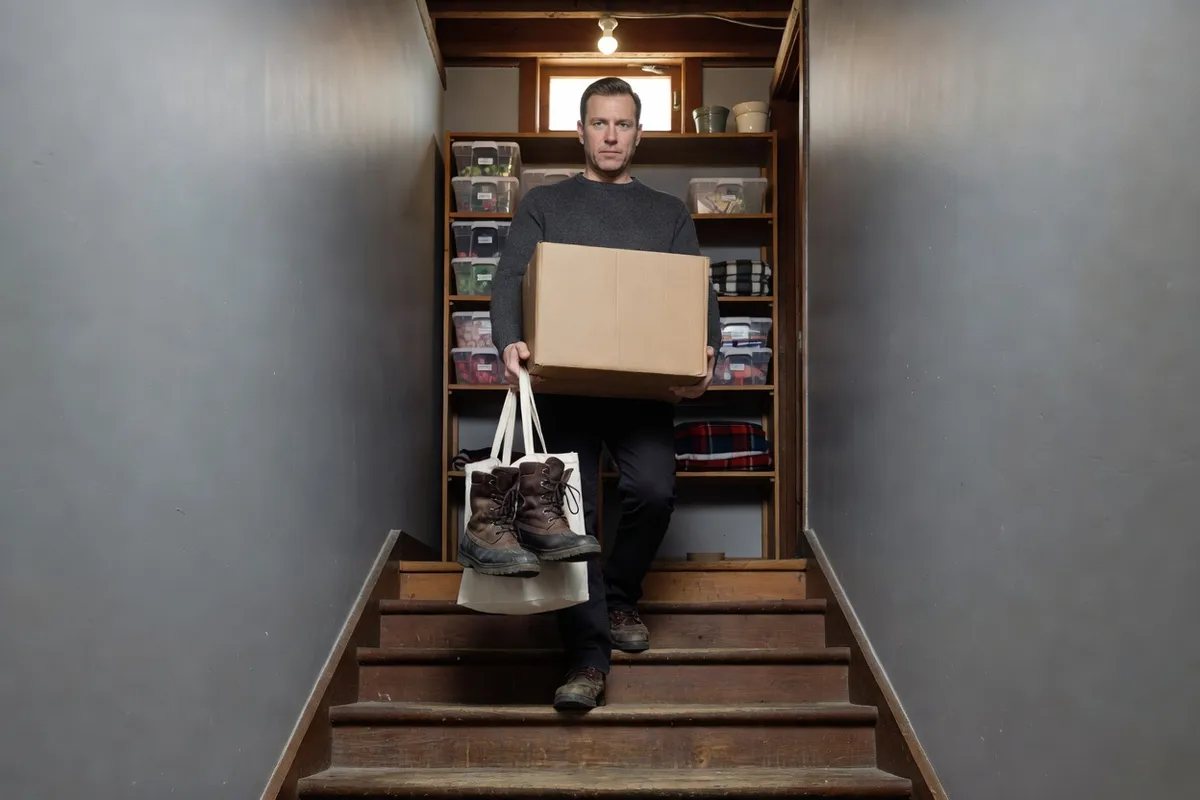
This is the point where the makers appear to disagree, so it is worth slowing down. Manitobah suggests packing dried boots in a sealed container, away from heat, moisture and pets. Steger Mukluks, in its care page, says to store mukluks in a cool, dry place, in the original box if you still have it, and never in a plastic bag, because residual moisture in a bag or container can cause problems.
The two statements fit together once the word "residual" is noticed. A sealed container is fine for a boot that is truly dry, and a bag becomes a problem when some moisture is still in the boot. The risk comes from trapped dampness, not from the container itself. In practice, that points to the following approach:
- If you are completely sure the boots are dry, a firm sealed container is a reasonable choice, in line with Manitobah's advice.
- If you have the original box, use it, as Steger Mukluks suggests, and keep it in a cool, dry spot.
- If you are unsure, pick something that breathes, such as a cotton bag or a box with air gaps, rather than a plastic bag.
- Wherever the boots sit, keep them off the floor of a damp basement and away from furnace rooms and attic corners.
Pajar's recommendation points the same way on location: a dark room at a steady, cool temperature. Baffin puts it as cool, dry and out of direct sunlight, avoiding damp or hot environments. Steger Mukluks specifically warns against a car trunk in warm weather. Put those together and the ideal spot is a bedroom closet or an interior shelf, and the poor ones are the garage, the attic and the unfinished basement.
Pets are an unexpected line in Manitobah's advice: the container is meant to sit away from them as well as from heat and moisture. A closed container on a high shelf covers that point without any extra effort.
Moths and mould: what wool linings invite
Boots with wool linings or felt liners fall into a category that people tend to forget: they are textiles, and textiles have pests. The Canadian Conservation Institute explains that insect pests typically feed on wool or silk fibres or on soiled textiles, and that they lay eggs in dark corners or creases where they often go unnoticed. Infested items should be isolated, and major infestations go to a professional conservator. That advice concerns textiles in general, not boots, but a woollen liner has dark creases in abundance.
Woolmark makes a related point for wool garments: food stains and body oils attract moths, so a garment should be clean before being packed in airtight bags or containers. It also suggests a Woolmark-endorsed moth repellent kept off the garment itself. Again, this is clothing advice, and no source read for this guide gives a moth recommendation for boots, so what follows is a careful translation rather than a rule:
- Clean liners and insoles are less appealing than soiled ones, so the cleaning step is also the moth step.
- Dark, undisturbed corners are the pests' preference, so a periodic look inside the shaft is worthwhile.
- A repellent, if one is used, should be a product approved for the purpose, kept away from direct contact with the material, and used according to its label.
The Institute also recommends checking storage areas regularly for signs of insects, such as holes or grazed surfaces on wool, webbing or cast larval skins, and says that good housekeeping goes a long way toward prevention. In plain terms: a tidy shelf and a mid-summer glance cost very little. If something does turn up, isolate that pair away from the others and consult a professional for anything beyond a small problem, as the Institute advises.
Mould is the other risk, and it is almost entirely a drying problem. Pajar ties proper drying to the prevention of mould, mildew and odours, and Steger Mukluks flags residual moisture as the trouble in a bag or container. A boot that was dry enough on the surface but damp inside is the classic culprit. When boots come out in the fall smelling musty, the usual explanation is that they were stored a few days too early.
Material by material: what to ask before you pack
No single recipe fits every pair. The table below is a set of questions to put to the care sheet for each boot, rather than a list of facts about the materials; where a maker has written advice, it is quoted from the sources above.
| Boot type | Questions to settle before storing | Relevant source advice |
|---|---|---|
| Mukluks (hide, felt or fabric) | Can the liners come out? Is the box still around? | Steger Mukluks: cool, dry place, original box, no plastic bag, no heat above about 32 °C |
| Boots with wool or shearling lining | Is the lining clean and fully dry? Are there dark creases that could shelter pests? | Woolmark and the Canadian Conservation Institute on wool and soiled textiles |
| Leather or suede boots | Has the salt been removed? Does the maker advise a protective treatment before storage? | Pajar: shoemaker visit before storage; see the waterproofing guide linked below |
| Industrial or work winter boots | Is the storage spot out of the sun? | Baffin: cool, dry, out of direct sunlight, boot trees or newspaper |
| Any boot with removable liners | Are both parts dry, and what needs replacing next year? | Kamik: rinse, remove liners, air-dry; Steger Mukluks: inspect liners and note replacements |
For leather and suede in particular, the question of waterproofing treatments belongs to its own guide: how to waterproof winter boots, with sprays and wax and what suits suede or leather. Some makers prefer that protection be applied at the start of the season; others at the end. The care page for your pair settles it, and the other guide explains what to look for.
The overall approach stays unchanged: clean, dry, shape, then store. What changes from one material to another is the finish, the details and the products used, not the order of the steps.
A simple storage calendar
A routine is easier to follow when it has dates. The calendar below uses the order recommended by the makers, with timing left flexible because the sources give none.
| When | Task | Why |
|---|---|---|
| End of the season | Quick inspection, note repairs, book a shoemaker if needed | Pajar recommends a shoemaker visit before storing |
| Same day | Remove liners and insoles, brush and rinse off dirt and salt | Kamik: lukewarm water, liners out |
| Next few days | Dry in a ventilated spot at room temperature, stuffed with paper | Pajar, Kamik, Woolmark on drying |
| When fully dry | Replace the paper with a shape support, choose a container, pick a cool, dark spot | Manitobah, Pajar, Steger Mukluks |
| Mid-summer | Open the box, check for odours, holes, webbing | Canadian Conservation Institute on regular checks |
| Early autumn | Wear test indoors, refresh protective treatment, buy replacement liners if noted | Steger Mukluks: note what will be needed |
Some Canadians live in cities where slush lingers into April and the first thaw is followed by another freeze, which makes it tempting to put boots away at the first sunny afternoon. The routine above is built to wait for the last cold days. For what that in-between stretch demands of footwear, the piece on boots, soles and socks for Montréal's slush season is a useful companion.
Waking the boots up in the fall
Storage ends with a short re-entry, and this is where the notes taken in spring pay off. Unpack the boots in a ventilated room and let them sit out for a few hours. Take out whatever support was inside. Check the shaft for creases, the soles for any change and the lining for a musty or sour smell. If a faint smell remains, air the boots and the liners in a room at normal temperature, using the same approach as for drying: slowly, without heat.
Then deal with the list. If you wrote down "liners thin at the heel", a replacement pair can be bought before the first snowfall, when nobody is rushing. If the shoemaker had work to do, the boots are back in time. If you decided on a protective treatment, apply it with a dry, clean boot and time to cure before going out.
For a wider look at what to keep in the care routine across the season, the pillar page on boot care and cleaning gathers the tasks in one place, and the guide to dressing and choosing boots for the Canadian climate explains how the boot type you own fits the weather it will face. If the question is how warm sheepskin actually is, what sheepskin does and does not do at -20 °C covers it.
Common mistakes, in one place
Reading the makers and conservation sources side by side, a short list of errors emerges. None of them is dramatic, and every one is easy to avoid.
- Packing boots that are only dry on the surface. The inside is what matters, and a thick liner holds moisture for longer than expected.
- Using heat to hurry. Heaters, radiators, fireplaces and hot cars appear in warnings from Pajar, Kamik and Steger Mukluks.
- Storing in sealed plastic without checking dryness. Steger Mukluks names residual moisture as the problem.
- Leaving the shaft to fold. Manitobah, Pajar and Baffin all describe some form of support.
- Skipping the check on the liners. Steger Mukluks wants them out, examined and noted.
- Forgetting that wool attracts pests. Woolmark and the Canadian Conservation Institute explain why a soiled textile in a dark corner is a target.
- Ignoring the repair window. Pajar's suggestion of a shoemaker visit before storage works because spring is quiet in the workshop.
None of this needs special equipment, only a table, some paper, a shelf and a little patience. Every maker cited here describes the same underlying habit: treat the end of the season as the start of the next winter's preparation, and the boots will be in a better state when you take them out. Remember to read the label on your own pair, because a care sheet written for one product never fully covers another.
Frequently asked questions
How long should winter boots dry before they go into storage?
The sources give no number of hours. Manitobah says to let boots dry fully, and Kamik says to air-dry at room temperature away from heaters. In practice, that means waiting until the inside no longer feels cool or damp to the hand, which can take several days for thick liners.
Can winter boots be stored in a plastic bag?
Steger Mukluks says never to put mukluks in a plastic bag, because residual moisture can cause problems. Manitobah suggests a sealed container, but only after the boots have dried completely. When in doubt, a breathable cotton bag or the original box is the safer choice.
Should the liners stay in the boots over the summer?
Kamik says to remove liners where possible before drying, and Steger Mukluks says to pull them out and inspect them for wear before storage. Removing them also lets both parts dry properly and lets you note what needs replacing.
Is it safe to leave winter boots in a car trunk or near a heater?
No. Steger Mukluks warns against leaving mukluks in a car trunk in warm weather, and Pajar and Kamik both say to keep drying boots away from radiators and heaters. Excess heat can damage the materials.
Do moths really go after boots?
Woolmark and the Canadian Conservation Institute say that moths and other pests feed on wool and on soiled textiles. Their advice is written for garments and textiles rather than boots, but a wool lining is wool all the same, so clean boots in a dark, dry place make sense.
Sources
Verified on
- Manitobah Mukluks, Frequently Asked Questions (FAQ), Manitobah Mukluks, 2026.
- Pajar, Cleaning Winter Boots: A Pajar Maintenance & Care Guide (5 août 2024), Pajar, 2024.
- Steger Mukluks, How To Tie, Clean & Care, Steger Mukluks, 2026.
- Baffin, Essential Tips for Maintaining Your Industrial Boots (7 août 2024), Baffin, 2024.
- Woolmark (The Woolmark Company / Australian Wool Innovation), Caring for Wool, Woolmark (The Woolmark Company / Australian Wool Innovation), 2026.
- Institut canadien de conservation, Basic care – Textiles, Gouvernement du Canada, 2026.
- Kamik, FAQs (Product Care & Use), Kamik, 2026.