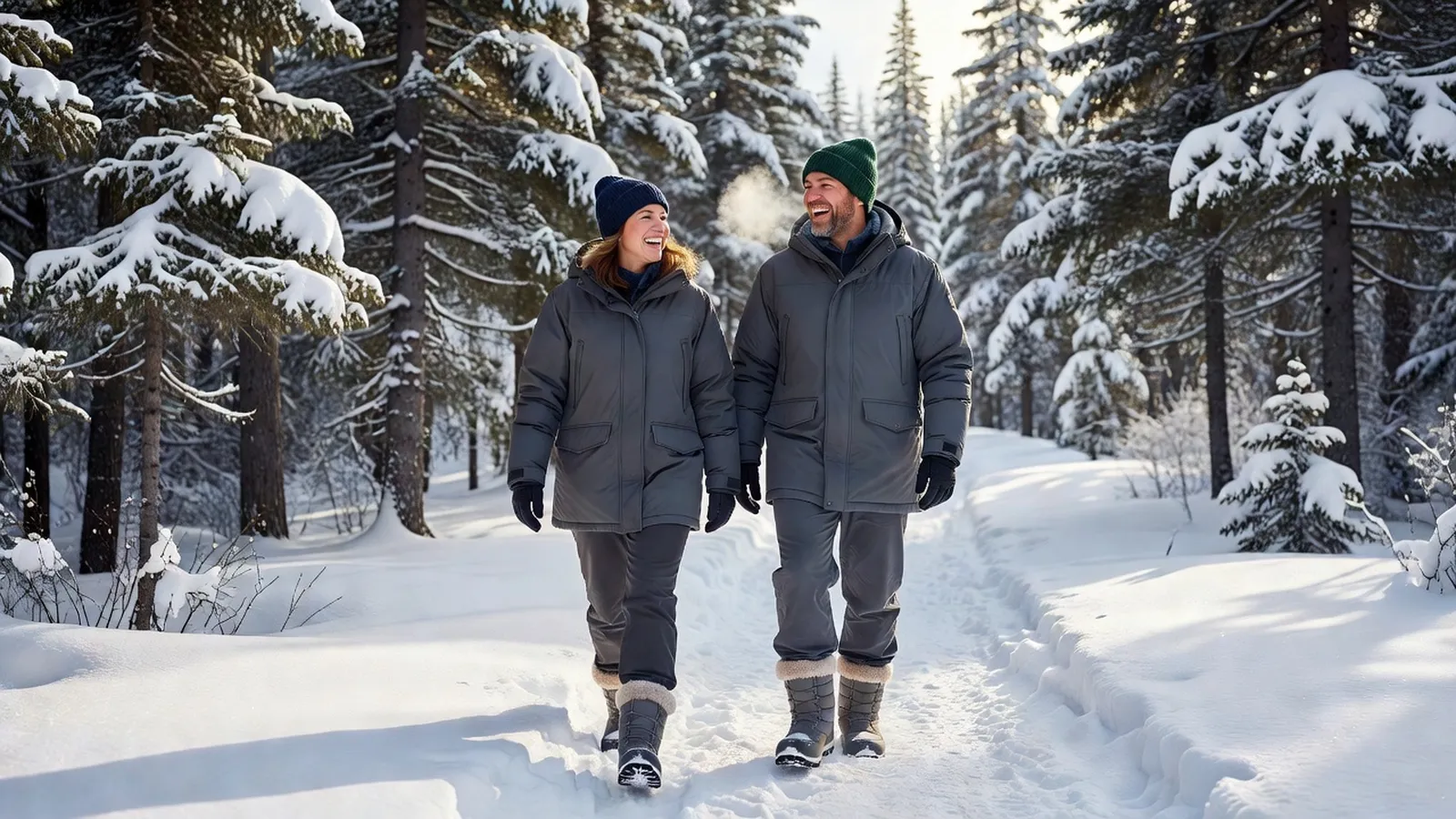
Vegan alternatives to sheepskin boots exist, but the label matters more than the lining. Among the brands whose Canadian pages were read for this guide, only Bearpaw states that some of its styles are vegan, right down to the glue. The others lean on synthetic insulation such as Thinsulate or foil-backed layers, and several still include wool or shearling. Synthetics tolerate damp well, wool breathes well, and neither earns its keep without dry socks and a liner that comes out overnight.
What "vegan" means on a boot page, and who actually says it
A boot can be free of sheepskin and still not be vegan. Wool felt, a polyester-and-wool blend, a leather upper or an animal-derived glue all count against the word, and the word is only as reliable as the maker's own description. That is why this guide keeps a strict rule: "vegan" appears only where a brand's own site writes it.
On that test, one name stands out. Bearpaw says its Elle Short, Elle Tall and Loki styles come in vegan microsuede versions, which it describes as made solely of vegan materials, from the microsuede down to the glue. That is a specific, checkable claim about named styles, which is more useful than a vague "animal-friendly" badge. It is also a claim about those versions only: it says nothing about the rest of the range, and it should not be stretched to cover other boots from the same maker.
For the other brands read here (Kamik, Baffin, Pajar, Cougar, Acton, Steger Mukluks), the pages consulted do not use the word vegan at all. That is not an accusation, and it does not mean the boots contain animal materials; it means the claim is not made, so this guide does not make it for them. Where a liner is described, the description is reported as written, and where it is silent, the text below stays qualitative.
If you want a sheepskin-free boot, the working method is simple: look for a technology page or product description that names every layer, and treat silence as "unknown" rather than "yes". The sheepskin side of the comparison is covered in the complete guide to sheepskin boots, which explains what the natural fleece brings and where its limits lie.
Four kinds of lining, side by side
Most winter boots sold in Canada get their warmth from a liner that falls into one of four families. The table sorts what the manufacturers consulted say about theirs. It describes materials as the brands present them, not performance rankings.
| Maker and model | What the page describes | Animal material mentioned? |
|---|---|---|
| Bearpaw (Elle Short, Elle Tall, Loki) | Vegan microsuede versions, with vegan materials said to run through to the glue | No, by the brand's own description of those versions |
| Bearpaw (HiberTech styles) | Foil-back insulation of 200 g | Not stated on the page |
| Acton (triple-density liner) | Polypropylene, a wool and polypropylene blend, a reflective Metaltek layer | Yes: the page says 100 % virgin wool |
| Acton (IFELT+ liner) | Brushed nylon, cushioned foam, 400 g Thinsulate Ultra, felt, polypropylene, Metaltek, cold-shield tongue | Not stated for every layer; felt is mentioned without detail |
| Baffin (removable inner boot) | Thermaplush wicking layer, B-Tek foam, hollow-fibre insulation, Hydromax layering, aluminum membrane, PolyWool, DiamondNet | PolyWool is a polyester-wool blend |
| Kamik (Nation Plus) | Removable liner with 145 g HeatMX insulation, -40 °C brand rating | Not stated on the page |
| Steger Mukluks (Traditional, Arctic) | Wool felt liner lined with polypropylene, wool felt insole | Yes: wool-based by design |
| Pajar (removable liners and insoles) | Removable liners, including shearling insoles | Yes where shearling is used |
Two things stand out. First, "synthetic" rarely means a single material: the liners above are stacks of three to seven layers, each with a job (moving moisture out, trapping air, reflecting heat back, cushioning). Second, wool turns up inside many products that are marketed as technical rather than traditional. A liner that contains a wool blend is not wrong, but it is not vegan either, and the label on the box may not say so.
Why synthetic insulation is promoted for slush and thaw
The case for synthetic insulation rests mostly on what happens when it gets damp, which in a Canadian winter is not an edge case. Slush, sweat and snow that melts on a warm hallway floor all put water into a boot.
Pajar says synthetic insulation keeps performing when damp, dries faster and withstands repeated wet-dry cycles, which it presents as a practical choice for wet slush and freeze-thaw days. Acton makes a related point about Thinsulate, a microfibre insulation developed by 3M. According to Acton's description, the microfibres trap air and the material absorbs less than 1 % of its weight in water, so it keeps its insulating qualities in moisture. Both statements come from manufacturers describing their own product, and both are worth reading as such: they explain the design intent, not an independent test result.
An independent anchor exists for the general principle. The Canadian Centre for Occupational Health and Safety says that wool and synthetic fibres keep heat when wet, whereas cotton is not recommended in the cold. Read together, these sources suggest the real dividing line is not wool against synthetic but animal or synthetic fibre against cotton. A cotton sock inside a perfect liner undoes much of the work. The Montréal slush-season article applies the same idea to an in-between climate where boots spend the day crossing puddles.
A short word on foil-backed layers
Bearpaw says its HiberTech styles use 200 g foil-back insulation, and Acton lists a reflective Metaltek layer in both its liners. The common idea is to reflect body heat back toward the foot. The pages consulted do not give a comparison figure against other materials, so this guide offers none; the point to keep is that reflective layers are a feature of synthetic designs and that they are usually one layer among several rather than the whole story.
What wool still does well, and why the honest answer is mixed
An article about alternatives should not pretend the original has nothing to offer. Woolmark, the promotion body for Australian wool, reports that after exercise in very cold conditions a person can feel three times more chilling in synthetic garments than in wool ones. It also reports that wool-filled jackets kept the skin's microclimate drier and warmer than polyester-filled jackets in a test run at 5 °C and 85 % humidity.
Those results come from an organization that promotes wool, and they concern garments rather than boot liners, so they cannot be transferred directly to a given pair of boots. They do show why the debate is not settled by a slogan. A synthetic liner that performs well when damp can still feel colder after a long, sweaty effort if the moisture it handles has nowhere to go; a wool liner can hold more water yet feel drier at the skin. Which effect dominates depends on the boot, the sock, the activity and the weather.
The practical reading is that sheepskin is not "warmer" and synthetics are not "worse" in any universal sense. The article on what sheepskin does and does not do at -20 °C goes through the natural side of the question, and it is worth reading beside this one before settling on a material.
Someone who avoids animal products for ethical reasons has a clear path: choose a boot whose maker states that it is vegan, and accept that the pairing with a synthetic liner and wool-free socks is part of the decision. Someone who avoids them only for the sake of a lower-maintenance liner, or because sheepskin does not like repeated soaking, has other options, including blends.
Removable liners: the feature that changes everything
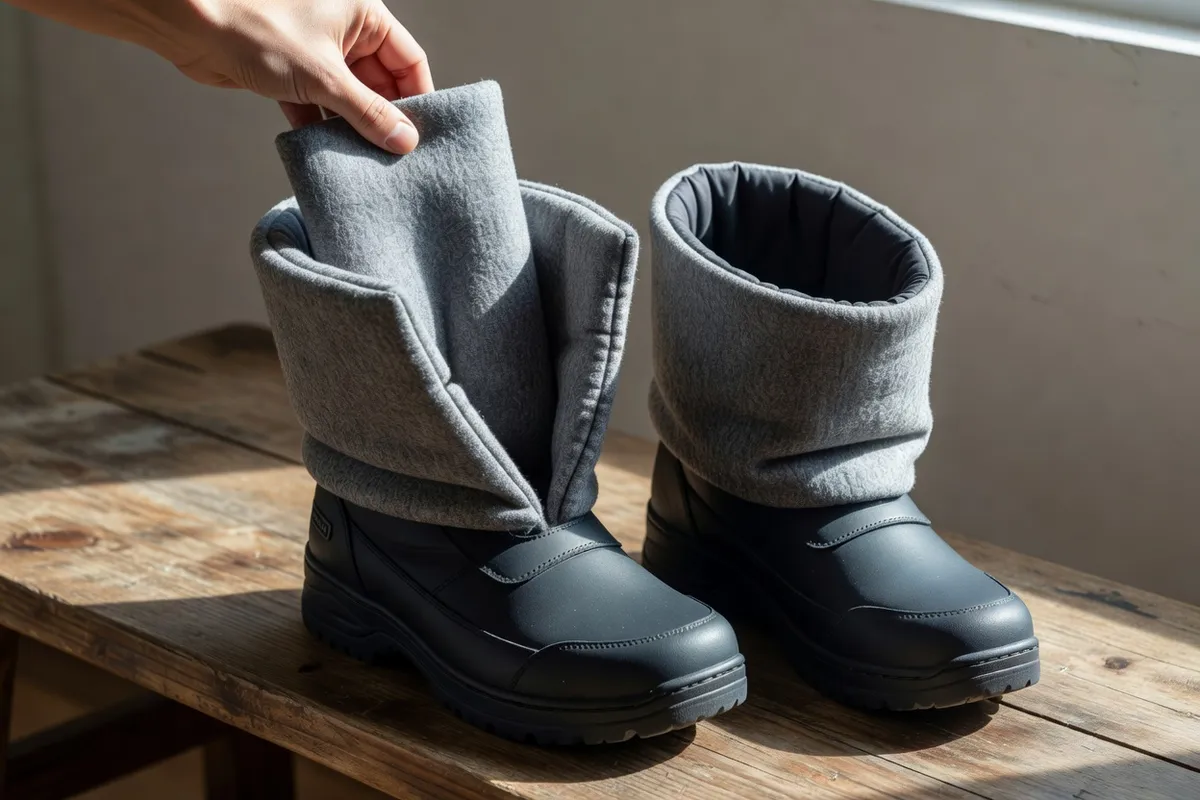
Of all the details on a boot page, the removable liner may matter most in daily use, because it is the one that fixes the damp problem. Pajar says removable liners, including removable shearling insoles, can be worn for maximum warmth on the coldest days and taken out to dry overnight, which helps extend the life of the boot.
Baffin goes further. It describes the removable inner boot of several models, including Impact, Titan, Magellan and James Bay, as a multi-layer system, and it says its replacement liners are a key part of that system. It adds that the inner boot may need replacing before the boot itself wears out, and that liners are sold as a pair. That last detail is easy to miss and deserves attention: a liner is a wear part, and a boot with a replaceable one can stay in service after the inner wears out.
On Baffin's page for the men's Impact, the boot is pitched at long stretches of extreme cold when you're moving little or at a moderate pace. It has a waterproof base and an inner boot made of several layers that lifts out. Kamik's Nation Plus men's boot carries a -40 °C rating from the brand, a removable liner with 145 g of HeatMX insulation and seam-sealed waterproof construction. That rating is the brand's own and applies to that model; Cougar states that its ratings depend on activity level and are a guideline only, which is a fair way to read any of them.
For a vegan shopper, removability brings a second benefit: the liner can be swapped, washed in the way the maker allows, or replaced without discarding the shell. It also brings a cost, covered next.
Sizing and socks: where a liner can quietly work against you
Kamik's FAQ makes a point that applies to every liner described above: liners take up space, especially with thick socks, and so they affect sizing. A boot that fits on a bare foot may be too snug once a liner and a wool sock are inside, so the size that looked right in the shop may need a second look. The sources consulted do not quantify this and this guide will not either; the lesson is to test fit with the full setup.
Socks matter as much as the liner. Cougar recommends wool socks to keep feet warm and dry and says to avoid cotton socks because they retain moisture and insulate less. This is the same message as the occupational-health source, applied to the foot. For someone who wants a fully vegan setup, the sock is the weak point: the standard advice is wool, so the sock itself needs the same label check as the boot. Synthetic socks exist, and the CCOHS statement that synthetic fibres keep heat when wet supports them; the brand sources consulted here, however, do not recommend a specific synthetic sock, so no model is named.
| Setup | What the sources say | What to check |
|---|---|---|
| Synthetic liner + wool sock | Wool socks recommended by Cougar | Whether the sock fits the vegan goal |
| Synthetic liner + synthetic sock | Synthetic fibres keep heat when wet (CCOHS) | Thickness with the liner in place |
| Any liner + cotton sock | Cotton retains moisture, insulates less (Cougar) | Avoid |
| Wool felt liner (Steger style) | Wool-based by design | Not suitable for a vegan goal |
The layering guide for winter places the foot in the larger system of base layer, mid layer and shell, which helps decide how much room to leave.
How to read a technology page before choosing
A brand's technology page is marketing, but it can be read critically. Four habits sort the useful pages from the vague ones.
- Look for layer-by-layer lists. Acton's page lists each layer of its liners, while a page that says only "advanced thermal insulation" gives you nothing to verify.
- Find the animal-material line. Wool, felt, shearling and leather each deserve a note; if the page does not mention them, ask the maker directly before buying.
- Separate the brand rating from a standard. A temperature figure such as the -40 °C on one Kamik model is a brand rating for that model, and the page does not describe the test behind it. It is not a guarantee for your commute.
- Check what can be replaced. A removable liner that is sold as a pair, as Baffin describes, outlasts one that is glued in.
The article on mukluks against sheepskin boots applies the same approach to a different pair of traditions, and the guide to Canadian winter boots covers the wider climate question that a liner choice has to answer.
Typical days, typical choices
The scenarios below are situations, not tests: none of them is a claim that someone wore a given boot. They show how the sources fit together for different weeks of winter.
A mild, wet week. Temperatures hover around freezing, snow turns to slush by noon and the hallway floor is wet. Here the moisture handling described by Pajar and Acton is the relevant feature, and a removable liner that dries overnight at room temperature is worth more than extra thickness.
A cold, dry week with a long walk. The risk shifts from damp boots to damp socks, since a long walk builds sweat. The Woolmark observation about chilling after effort becomes relevant, and so does the choice of sock. A thicker liner is not necessarily the answer; room for air and a dry sock inside are.
A week of standing still. Baffin describes its Impact boot as suited to extended periods in extreme cold where activity is low to moderate, which is the profile of a long wait at a bus stop or a rink-side bench. A model aimed at that profile sits at one end of the range, while a lighter boot with a thin liner suits the opposite end.
A transitional week. Freeze-thaw swings are the case Pajar names directly. Repeated wet-dry cycles are exactly where a liner that can be pulled out and dried matters most.
In every case, the boot's own rating is one piece of information among several, and the sources are consistent in saying so.
Caring for liners without ruining them
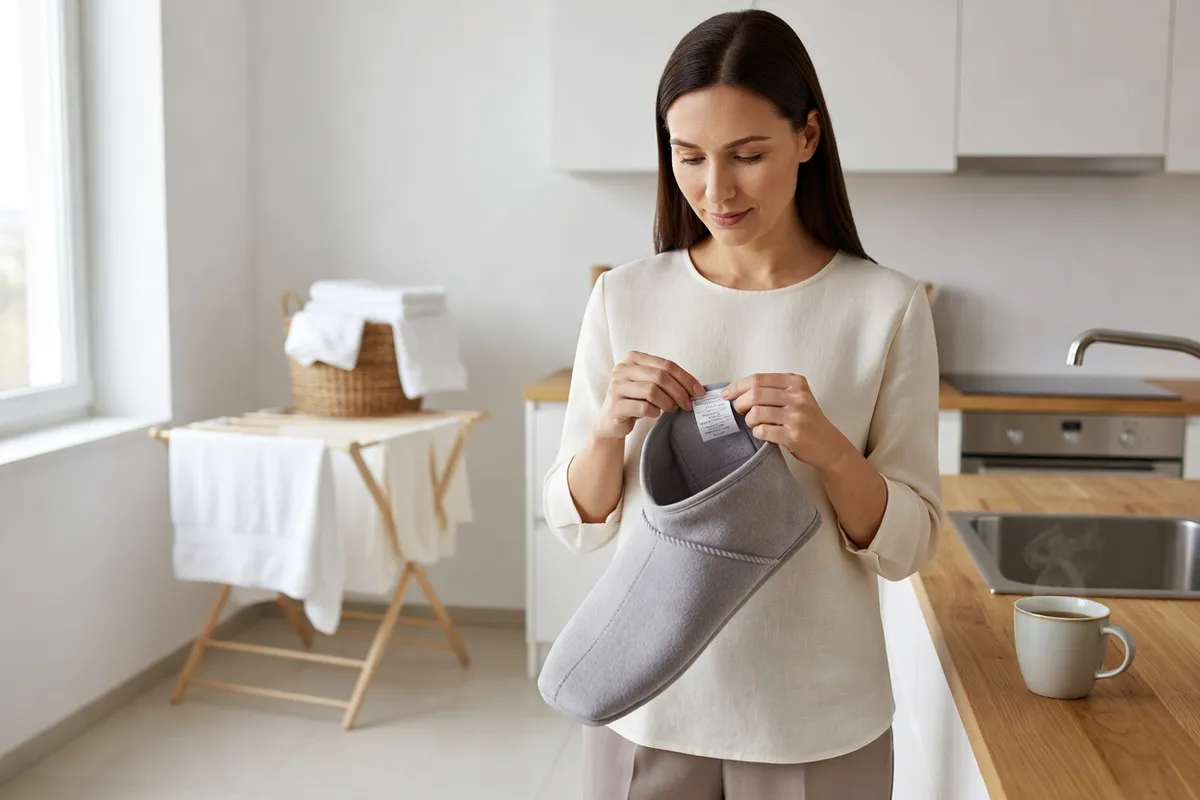
Care is where many liners fail early. The manufacturer guidance consulted is consistent. Kamik says neither its boots nor its liners should be put in the washing machine, and that liners should be removed when possible so that everything air-dries fully. It also says its boots should be rinsed in lukewarm water to remove dirt and salt after winter or heavy use, then air-dried at room temperature away from heaters or fireplaces.
For wool-containing liners, Woolmark gives a compatible rule: damp wool should be left to dry at room temperature, out of direct sun and away from any heat source. The principle, then, holds across materials: let the drying happen slowly, in a room, and keep boots away from a radiator or a fireplace.
A short routine follows from these sources:
- Pull the liner out as soon as you get in, if the boot allows it.
- Let the liner and the shell dry separately at room temperature.
- Rinse salt off with lukewarm water at the end of the season, as Kamik advises.
- Skip the machine, the dryer and the heater.
Salt deserves its own attention. The guide to salt stains explains how white rings form and how to deal with them, and the boot care and cleaning hub gathers the rest. When the season ends, the piece on storing winter boots for the summer covers the last step.
Official sources on cold exposure are available from the Canadian Centre for Occupational Health and Safety, and the care advice on wool comes from Woolmark.
A short comparison to keep in mind
| Question | Synthetic liner | Wool or felt liner | Vegan-labelled version |
|---|---|---|---|
| Behaviour when damp | Described by Pajar and Acton as good | Wool keeps heat when wet (CCOHS) | Depends on the construction |
| Moisture after effort | Woolmark reports more chilling in synthetic garments | Woolmark reports a drier microclimate in a wool-filled jacket test | Check the layers listed |
| Drying | Described as faster (Pajar) | Dry at room temperature (Woolmark) | Follow the maker's care page |
| Claim to verify | Whether wool is blended in | Whether it is all wool | Whether the maker writes "vegan" |
None of the columns wins outright. A person who cares most about animal-free materials should read the last column first; a person who cares most about a wet commute might read the first; and a person who spends long days in the cold might read the second. The point of reading widely, and not just the loudest claim, is to match the boot to the week.
Before you choose: questions worth asking
A few questions turn a vague hunt into a decision.
- Does the maker's own page say "vegan", and for which styles exactly?
- Is the liner removable, and is a replacement sold as a pair?
- Are wool, felt or shearling listed anywhere in the layers?
- What activity level does the temperature rating assume?
- How does the boot fit with the liner in and a thick sock on?
- What care instructions does the maker give, and do they match what you will actually do?
The history of the sheepskin boot itself, including how its name entered everyday speech, is told in the article on Australian sheepskin boots and the trademark question. For this subject it is enough to remember that "vegan alternative" is a claim about materials, not about style.
The Frost & Fleece editorial team compiled this guide from manufacturer and public-agency pages dated 2025 and 2026, and it will be updated as the makers revise their descriptions. The Bearpaw technology and care page is the source for the vegan claim, and Kamik's FAQ is the source for the care routine.
Frequently asked questions
Is there a vegan alternative to sheepskin boots?
Yes, but the claim has to come from the maker. On the pages consulted for this guide, Bearpaw is the only one that uses the word vegan, for vegan microsuede versions of its Elle Short, Elle Tall and Loki styles.
Are synthetic linings as warm as wool?
The sources do not allow a blanket answer. Woolmark reports that wool-filled jackets kept the skin drier and warmer than polyester-filled ones in one test, while Pajar and Acton present synthetic insulation as a good performer when damp. Warmth depends on the whole boot and on activity level.
Do synthetic liners still work when wet?
Pajar says synthetic insulation keeps performing when damp and dries faster, and Acton says Thinsulate absorbs less than 1 % of its weight in water. The Canadian Centre for Occupational Health and Safety adds that wool and synthetic fibres keep heat when wet, whereas cotton is not recommended in the cold.
Can I machine-wash a boot liner?
Kamik states that neither its boots nor its liners should go in the washing machine. It advises rinsing with lukewarm water, removing the liners when possible and letting everything air-dry at room temperature, away from heaters or fireplaces.
Why does a removable liner change the fit?
Kamik notes that liners take up space, especially with thick socks, so they affect sizing. Try the boot with its liner in and with the socks you actually plan to wear.
Sources
Verified on
- Bearpaw, Bearpaw Technology and Care, Bearpaw Canada, 2026.
- Pajar, How to choose winter boots that keep you warm (Pajar Canada blog), Pajar Canada, 2026.
- Acton Canada (Chaussures Régence), Technology, Acton Canada, 2026.
- Baffin, REPLACEMENT LINER | Men's (Multi-Style Compatibility), Baffin, 2026.
- Baffin, IMPACT | Men's Boot, Baffin, 2026.
- Kamik, NATION PLUS Winter Boots, Men, Kamik, 2026.
- Kamik, FAQs (Product Care & Use), Kamik, 2026.
- Cougar Shoes Canada, Temperature Ratings, Cougar Shoes Canada, 2026.
- Steger Mukluks, Arctic – Steger Mukluks, Steger Mukluks, 2026.
- Woolmark (The Woolmark Company / Australian Wool Innovation), Wool is naturally breathable, Woolmark (The Woolmark Company / Australian Wool Innovation), 2025.
- Centre canadien d'hygiène et de sécurité au travail (CCHST), Cold Environments - Control Measures, Centre canadien d'hygiène et de sécurité au travail (CCHST), 2025.
- Woolmark (The Woolmark Company / Australian Wool Innovation), Caring for Wool, Woolmark (The Woolmark Company / Australian Wool Innovation), 2026.